- Home
- Locations
- Turf Installation
- Services
- About
- Recent Projects
- Blog
- Contact
For many Arizona homeowners, installing artificial turf isn’t just about reducing yard work—it’s also an investment in the overall appeal and functionality of the property. Whether you’re planning to sell in the near future or simply want to improve your outdoor living space, it’s natural to wonder whether synthetic grass can actually increase your home’s value.
The answer is nuanced.
Artificial turf doesn’t automatically increase a home’s appraised value by a fixed percentage, but it can significantly improve buyer appeal, curb appeal, water efficiency, maintenance costs, and overall marketability—all of which can contribute to stronger offers and faster sales in the right market. In Arizona, where maintaining a healthy natural lawn can be expensive and water-intensive, professionally installed artificial grass often aligns well with what today’s buyers are already looking for.
Unlike traditional grass that requires constant irrigation, mowing, fertilizing, reseeding, and seasonal maintenance, modern synthetic turf provides a consistently attractive lawn throughout the year with minimal upkeep. For busy families, pet owners, retirees, vacation homeowners, and buyers relocating from colder climates, these benefits can make a property considerably more desirable.
However, not every turf installation adds the same value.
The quality of the materials, the installation process, drainage system, landscape design, and how well the turf complements the rest of the property all influence whether buyers see it as a premium feature or simply another landscape choice. A professionally designed backyard with integrated hardscaping, shade, pet areas, and quality artificial grass will typically create a much stronger impression than a poorly installed lawn covering an otherwise unfinished yard.
In this guide, we’ll explain how artificial turf affects home value in Arizona, what real estate professionals and buyers tend to look for, where turf delivers the greatest return on investment, and how to maximize the value of your landscaping project. We’ll also compare artificial turf to natural grass, discuss common misconceptions, and answer many of the questions homeowners ask before making the investment.
Along the way, we’ll reference related topics like artificial turf versus natural grass in Arizona, installation quality, maintenance, financing, and long-term ownership costs so you can make an informed decision based on your goals rather than marketing claims.
The short answer is yes—but indirectly.
Artificial turf doesn’t work like a kitchen remodel or additional square footage where an appraiser can assign a straightforward dollar value. Instead, it improves many of the factors that influence how buyers perceive a home.
A professionally installed artificial lawn can:
For buyers comparing several homes in the same neighborhood, landscaping often creates one of the first impressions. A lush, green lawn that looks healthy in the middle of an Arizona summer can immediately make a property feel better maintained and more move-in ready than a home with patchy grass, bare dirt, or high-maintenance landscaping.
This doesn’t necessarily mean a buyer will pay thousands more solely because artificial turf was installed. Instead, attractive landscaping may help support stronger offers by making the home more desirable overall. In competitive markets, features that reduce future maintenance and improve everyday livability can influence purchasing decisions just as much as cosmetic updates inside the home.
The impact is often even greater when artificial turf is part of a complete outdoor design that includes pavers, shade structures, seating areas, or functional spaces for children and pets. Rather than seeing turf as an isolated upgrade, many buyers view it as part of a thoughtfully designed backyard that extends the home’s usable living space.
For Arizona homeowners, another important consideration is water conservation. As utility costs continue to rise and drought remains a long-term concern across the Southwest, low-water landscaping has become increasingly attractive. Artificial turf allows homeowners to maintain a green landscape without the ongoing irrigation requirements of natural grass, making it an appealing feature for buyers looking to reduce both maintenance and monthly expenses.
While every property is unique, quality artificial turf is best viewed as an investment in marketability, curb appeal, and buyer confidence rather than a guaranteed increase in appraised value. Those benefits can make a meaningful difference when it’s time to sell, especially in Arizona’s climate where maintaining natural grass year-round presents ongoing challenges.
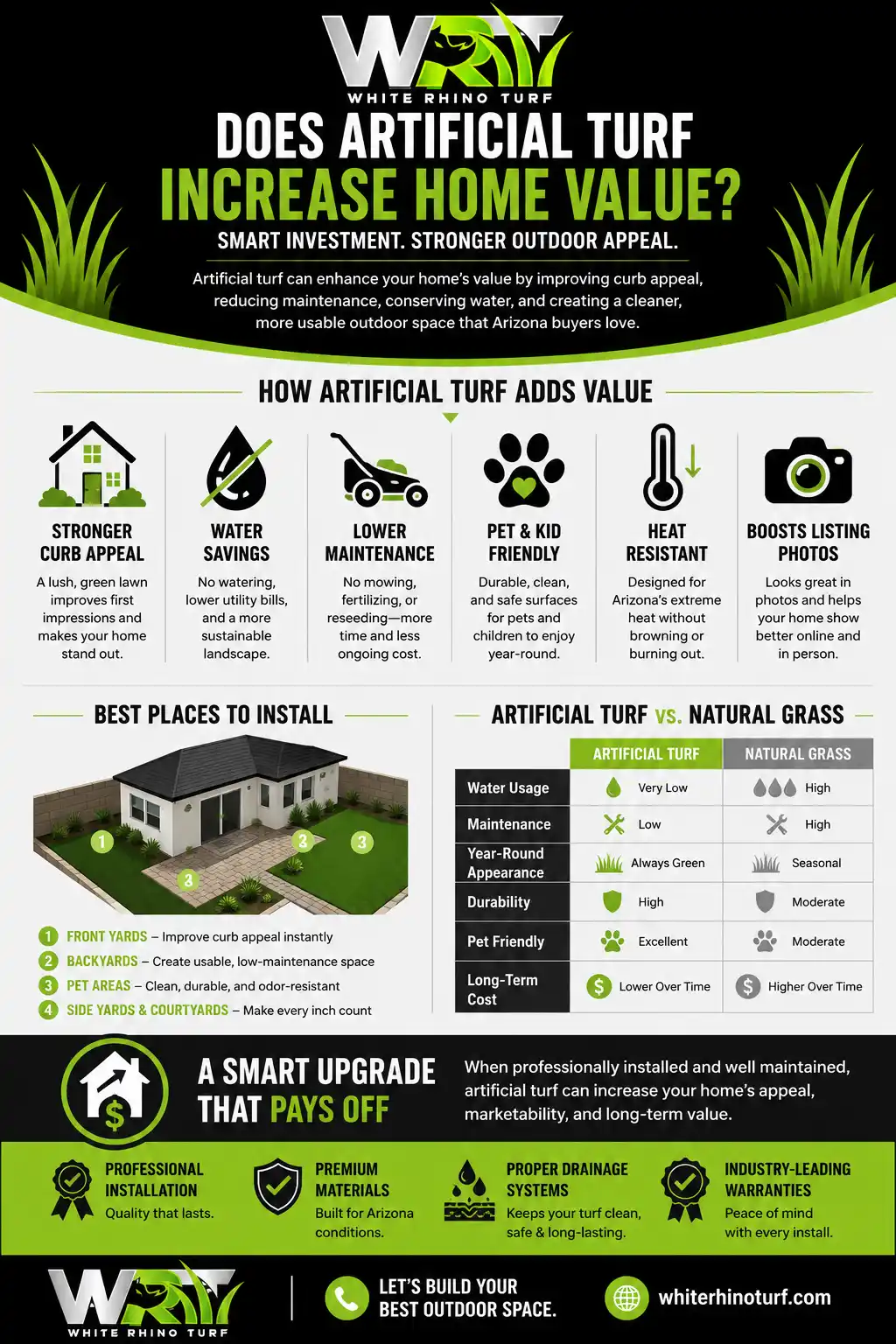
Artificial turf can be especially appealing in Arizona because it solves several problems buyers already understand. A natural lawn may look attractive when it is healthy, but in Phoenix and surrounding desert communities, keeping grass green often requires regular watering, mowing, fertilizing, weed control, sprinkler maintenance, and seasonal care.
For many buyers, that ongoing responsibility is a drawback.
Synthetic grass offers a different kind of value: a clean, consistent, low-maintenance landscape that looks finished without the same level of upkeep. This matters in Arizona neighborhoods where buyers may be comparing homes with dry dirt yards, patchy grass, rock-only landscaping, or outdated outdoor spaces.
Artificial turf can support buyer appeal by making the yard feel:
In Arizona, buyers often want a backyard that looks good without demanding constant attention. A thoughtfully designed turf area can help create that impression, especially when it is paired with shade, pavers, desert plants, lighting, or seating areas.
This is also why artificial turf should be viewed as part of a complete outdoor living strategy rather than a standalone feature. A small, well-placed turf area can sometimes feel more valuable than an oversized lawn if it improves the way the yard functions. For example, turf may add practical value as a pet area, play space, putting green transition, courtyard feature, or soft surface between pavers and patios.
Homeowners comparing upgrade options can also review why synthetic turf makes sense for Arizona homes when they want a landscape that feels green, clean, and easier to manage in desert conditions.
Curb appeal is one of the biggest ways artificial turf can influence home value. Buyers begin forming opinions before they walk through the front door, and landscaping plays a major role in that first impression.
A front yard with worn grass, uneven patches, sprinkler overspray, weeds, or dry soil can make the home feel less maintained, even if the interior is in good condition. On the other hand, a clean artificial lawn can create a polished look that photographs well and stays visually consistent through hot Arizona summers.
That visual consistency matters because natural grass in Arizona can be difficult to keep attractive year-round. Summer heat, irrigation issues, soil compaction, pets, shade changes, and seasonal transitions can all affect how a lawn looks. Artificial turf helps reduce those visual swings by keeping the yard green and uniform through changing weather conditions.
For resale, this can help the property feel more prepared for showings. Buyers may not always calculate the exact cost of future landscaping work, but they do notice when a yard looks finished. A home with artificial turf may feel easier to move into because the buyer is not immediately thinking about replacing dead grass, fixing sprinklers, removing weeds, or redesigning the outdoor space.
Artificial grass can also make smaller yards feel more intentional. In many Phoenix-area homes, especially newer builds or compact lots, the backyard may be mostly dirt, gravel, or concrete. Adding turf can create a defined outdoor zone that makes the space feel more complete and usable.
The key is balance. Turf tends to create the strongest curb appeal when it looks natural and works with the rest of the landscape. That means clean edges, proper grading, professional seams, quality infill, and thoughtful transitions into pavers, rock, plants, or hardscape features.
When artificial turf looks like part of the design instead of a quick cover-up, buyers are more likely to view it as an upgrade.
One of the most important distinctions for homeowners is the difference between appraised value, resale value, and perceived value. These terms are often used interchangeably, but they do not mean the same thing.
Appraised value is the value assigned by an appraiser based on comparable sales, market conditions, property features, and lender requirements. Artificial turf may be noted as a property improvement, but that does not guarantee a specific dollar adjustment in the appraisal.
Resale value is what a buyer is willing to pay for the home in the current market. If buyers in your neighborhood strongly prefer low-maintenance landscaping, artificial turf may help the home compete better against similar properties.
Perceived value is the emotional and practical impression buyers form when they see the home. A finished backyard, clean pet area, or green front lawn can make a property feel easier to own, even before a buyer reviews every detail of the home.
This is why artificial turf often has its greatest impact before the appraisal stage. It can improve how the home shows, how it photographs, and how buyers feel about the property. Those advantages can influence buyer interest, especially when the alternative is a yard that looks unfinished or expensive to fix.
According to Fannie Mae property valuation guidance, appraisers consider comparable sales, local market conditions, and property amenities when forming an opinion of value. That means artificial turf is most likely to matter when it is consistent with buyer expectations and supported by what similar homes in the area offer.
For Arizona homeowners, the safest way to think about artificial turf is this: it may not create an automatic appraisal increase, but it can support stronger resale appeal when it improves the property’s condition, usability, and presentation.
Not all artificial turf installations affect home value the same way. Buyers can usually tell the difference between a professional landscape upgrade and a low-quality installation that was added quickly before listing the home.
Artificial turf is more likely to support home value when it feels intentional, durable, and appropriate for the property.
Installation quality is one of the biggest factors. A well-installed turf system should have proper excavation, base preparation, compaction, drainage planning, secure edges, clean seams, and appropriate infill. These details affect how the lawn looks, feels, drains, and holds up over time.
If the turf is uneven, wrinkled, poorly seamed, or holding odors, buyers may view it as a problem rather than a benefit. A clean installation gives buyers more confidence that the yard will remain usable after closing.
Modern synthetic grass is available in different blade shapes, pile heights, colors, densities, and textures. Turf that looks too shiny, too flat, or overly artificial may not create the same buyer appeal as a more realistic product.
For Arizona homes, the best turf often balances a natural look with heat resistance, durability, and drainage performance. Homeowners can learn more about product selection in this guide to the best artificial grass for Arizona heat.
Turf tends to add more perceived value when it improves how the yard is used. A small lawn area for kids, pets, entertaining, or visual contrast can feel more valuable than covering every open space with turf.
In many Arizona yards, the strongest designs use artificial grass strategically alongside pavers, rock, native plants, trees, and shade features. This makes the yard feel green without ignoring desert design principles.
Drainage matters in Arizona, especially for pet owners and homes that experience monsoon runoff. Turf should be installed over a prepared base that allows water to move through the system instead of pooling on the surface.
For pet-heavy yards, infill selection and routine cleaning also affect buyer perception. A turf area that smells clean and drains properly is far more likely to be seen as an upgrade than one with odor buildup or soft spots.
Artificial turf usually works best when it is part of a balanced outdoor design. Pavers, plants, lighting, seating areas, and shade can all help the yard feel more finished. Buyers are often drawn to outdoor spaces that feel usable, not just green.
This is why many Arizona homeowners pair artificial grass and pavers in one backyard design. The combination can create clean walking areas, defined patios, and softer green zones without relying on a traditional lawn.
When homeowners ask about artificial turf return on investment, they are usually thinking about resale price. That matters, but ROI can also include maintenance reduction, water savings, improved daily use, and avoiding repeated lawn repairs.
In Arizona, artificial turf often delivers the strongest return when it solves a specific problem that buyers can immediately understand.
If the front yard has dead grass, patchy growth, weeds, bare soil, or visible sprinkler problems, artificial turf can create a cleaner first impression. This can matter when the home is photographed, shown, or compared against similar listings nearby.
Many Arizona homes, especially newer builds, start with dirt, gravel, or a basic patio slab. Adding artificial turf can help define the backyard and make the outdoor space feel more complete. For buyers, a finished backyard may feel like one less project to take on after closing.
Pet owners often pay close attention to yard function. A muddy, dusty, or patchy lawn can be frustrating for dogs and homeowners. A properly installed pet turf area with drainage and odor-control planning can make the home more appealing to buyers with pets.
This is especially true when the turf is designed as a practical pet area rather than just a decorative lawn. Buyers may see it as a ready-to-use feature that supports daily life.
Artificial turf can be a strong fit for smaller spaces where natural grass is difficult to maintain. Courtyards, townhome yards, side yards, and compact backyards often benefit from a soft green surface that does not require a full irrigation system.
Arizona buyers often value outdoor spaces that feel connected to the home. Turf can soften hardscape-heavy yards, create visual contrast, and make patios or seating areas feel more inviting. When combined with pavers, travertine, lighting, or shade, turf can help the yard feel like an extension of the indoor living area.
Homeowners planning a larger project may also want to compare turf with other outdoor upgrades through resources like White Rhino Turf’s artificial turf backyard ideas for Phoenix homes.
Artificial turf can add appeal, but it is not automatically the right choice for every property. In some cases, turf may have little effect on resale value, or it may even create concerns for certain buyers.
The most common issue is poor installation. If the turf looks uneven, has visible seams, feels loose at the edges, traps odors, drains poorly, or appears worn out, buyers may see it as something they will need to repair or replace. In that situation, turf can become a negotiation point instead of a selling feature.
Artificial turf may also be less appealing when it covers too much of the yard without design balance. A yard that is entirely turf, rock, and concrete can feel hot or visually flat in Arizona. Buyers may prefer a mix of turf, trees, plants, pavers, and shaded areas that create a more comfortable outdoor space.
Heat is another important consideration. Artificial grass can become hot in direct sun, especially during Arizona summers. That does not mean turf is a bad investment, but it does mean homeowners should plan carefully. Product selection, shade, infill, irrigation-free cooling strategies, and where the turf is placed all influence comfort.
For more detail on this concern, homeowners can review practical tips on how to keep artificial turf cool in Arizona heat.
Artificial turf may also have less resale impact if the surrounding neighborhood does not value low-maintenance landscaping, or if most comparable homes have highly upgraded outdoor spaces. In those cases, turf may still improve daily usability, but it may not stand out enough to create a meaningful resale advantage by itself.
Finally, homeowners should avoid assuming artificial grass is completely maintenance free. While it eliminates mowing and greatly reduces many lawn-care tasks, turf still needs occasional rinsing, debris removal, brushing, and spot cleaning. A neglected turf lawn will not deliver the same buyer appeal as one that looks clean and well cared for.
When comparing artificial turf and natural grass, the resale conversation depends heavily on climate. In some regions, buyers may strongly prefer real grass. In Arizona, the answer is more complicated because natural grass requires ongoing irrigation and maintenance to stay healthy.
Natural grass can feel cooler underfoot and may appeal to buyers who prefer living landscapes. However, it also comes with more upkeep, especially during extreme heat. Homeowners may need to manage watering schedules, irrigation repairs, mowing, fertilizing, weed control, seasonal overseeding, and bare spots.
Artificial turf removes many of those responsibilities. It stays green without regular irrigation, does not need mowing, and can keep a yard looking more consistent through summer heat and dry periods. That can make it more attractive to buyers who want a lower-maintenance Arizona home.
The best choice often depends on the property and the buyer. A large estate lot with mature trees and a healthy lawn may not need artificial turf to feel valuable. A smaller Phoenix-area backyard with patchy grass, poor irrigation, or heavy pet use may benefit significantly from synthetic grass.
For many Arizona homes, the highest-value approach is not necessarily turf versus grass. It is choosing the landscape design that makes the yard easier to enjoy, easier to maintain, and better suited to the desert climate.
Homeowners weighing both options can compare the pros and cons more deeply in White Rhino Turf’s guide to artificial turf vs. real grass in Arizona.
Low-maintenance landscaping is one of the biggest reasons Arizona homeowners consider artificial turf. A yard that looks good without constant watering, mowing, fertilizing, reseeding, and sprinkler repair can be highly appealing to buyers who want a home that feels easier to own.
This is especially important in Phoenix and surrounding communities where outdoor spaces deal with extreme heat, intense sun exposure, compacted soil, dust, monsoon debris, and long dry seasons. Natural grass can look beautiful when it is healthy, but keeping it that way often requires a level of upkeep many homeowners do not want to inherit.
Artificial grass changes that equation. Instead of planning around mowing schedules, irrigation adjustments, dead spots, and seasonal lawn recovery, homeowners can maintain a green, usable yard with a much simpler routine.
That does not mean artificial turf is maintenance free. Buyers should still understand that turf needs occasional rinsing, brushing, debris removal, and spot cleaning, especially in pet areas or high-traffic zones. However, compared to natural grass, the weekly and seasonal workload is usually much lower.
For resale, that lower-maintenance appeal can matter. A buyer walking into a home with a clean turf yard may see fewer weekend chores, fewer landscape repairs, and fewer unknown costs after closing. That perception can make the property feel more move-in ready.
Homeowners who want to understand long-term care expectations can review this artificial turf maintenance guide for Arizona before deciding how turf fits into their larger landscape plan.
Water use is another major reason artificial turf can influence home value in Arizona. Buyers in Phoenix, Mesa, Tempe, Gilbert, Chandler, Scottsdale, Queen Creek, and surrounding desert communities are increasingly aware that traditional lawns require significant irrigation to stay green.
For homeowners, that can mean higher water bills, irrigation repairs, runoff issues, and ongoing maintenance. For buyers, it can create hesitation if the yard looks expensive or difficult to maintain.
Artificial turf can help position a home as more water-conscious because it provides the appearance and function of a green lawn without the same routine watering requirements as natural grass. That can be attractive to buyers who want a greener-looking yard but do not want to maintain a traditional lawn in the desert.
It is important, however, to frame this correctly. Artificial turf is not the only form of water-saving landscaping, and it should not be presented as a complete substitute for thoughtful desert design. In many Arizona yards, the strongest approach is a balanced mix of turf, pavers, rock, low-water plants, trees, and shade.
The EPA WaterSense outdoor water use guidance notes that residential outdoor water use is largely driven by landscape irrigation. That broader context helps explain why many Arizona buyers are interested in landscaping choices that reduce watering demands.
For resale, the key is not simply saying “this yard saves water.” The stronger message is that the landscape is designed for Arizona conditions. Buyers want to see a yard that looks good, functions well, and does not feel like it will become an expensive maintenance project.
Artificial turf can help accomplish that when it is placed strategically and paired with other drought-tolerant landscaping elements. A backyard with turf for usable green space, pavers for entertaining, and desert plants for texture and shade may feel more valuable than either a thirsty grass lawn or an all-rock yard with little function.
Artificial turf can improve a yard, but turf alone does not automatically create a high-value landscape. Buyers respond to outdoor spaces that feel complete, comfortable, and easy to use.
That is why design matters so much.
A simple rectangle of turf may improve a bare yard, but a more thoughtful layout can do much more. Turf can define a play area, soften a paver patio, create a cleaner transition around a pool deck, frame a putting green, or provide a pet-friendly surface off the back door.
In Arizona, design also needs to account for sun exposure. A turf area placed in full afternoon sun with no shade may be less comfortable during the hottest months. A turf area placed near covered patios, shade trees, ramadas, pergolas, or evening-use spaces may feel more practical and inviting.
Buyers are more likely to see value when the yard answers real lifestyle needs. That might include:
Design can also help prevent turf from feeling excessive. In many Arizona homes, buyers may prefer a landscape that combines green space with desert-adapted features. That combination can feel more natural to the region and more comfortable for everyday use.
This is why artificial turf often works best as one element in a larger outdoor plan rather than the only feature in the yard.
Artificial turf can be a smart pre-sale improvement when the existing yard is hurting the home’s presentation. If the lawn is dead, patchy, muddy, dusty, or difficult to photograph well, replacing it with synthetic grass may help the home feel cleaner and more move-in ready.
Before listing a home, sellers usually want improvements that make the property easier to understand and easier to like. Artificial turf can help because it creates an immediate visual upgrade. Buyers do not have to imagine what the yard could become. They can see a finished outdoor space during the showing.
That said, artificial turf is usually not the best last-minute upgrade if the rest of the yard still feels unfinished. If the patio is cracked, plants are overgrown, lighting is poor, or drainage issues are obvious, turf alone may not solve the bigger problem. In those cases, a more balanced outdoor refresh may create a stronger impression.
Sellers should think about three questions before installing turf for resale:
If the answer is yes, artificial turf may be worth considering before selling. If the home already has attractive, healthy, well-maintained landscaping, turf may be less urgent and may not create the same return.
For homeowners comparing the investment to their selling timeline, White Rhino Turf’s guide to artificial turf cost in Phoenix can help explain the major pricing factors that influence a project.
Installation quality plays a major role in whether artificial turf supports home value. Buyers may not know every technical detail of turf installation, but they can usually recognize when something looks off.
Common issues that can hurt perceived value include:
A professional installation should feel stable, clean, and intentional. The turf should be properly secured, the edges should look finished, and the surface should drain correctly. In pet areas, drainage and infill are especially important because odor problems can quickly change how buyers perceive the yard.
This is where artificial turf can either become an asset or a liability. High-quality turf installed over the right base can make a yard feel upgraded. Poorly installed turf can make buyers wonder what else was done cheaply around the home.
For Arizona homeowners, the installation also needs to account for heat, soil conditions, dust, monsoon runoff, and heavy use. A turf system that may work in another climate is not always the right fit for Phoenix-area homes.
Homeowners who want to understand what goes into a properly planned project can review White Rhino Turf’s 6-step turf installation guide for Phoenix, which explains the basic installation process from site preparation through final grooming.
Buyers are more likely to view artificial turf as a valuable feature when it looks like it has useful life remaining. A clean, well-maintained turf lawn can suggest that the buyer will be able to enjoy the yard without making immediate updates.
On the other hand, turf that appears faded, matted, loose, or uneven may raise questions. Buyers may wonder how old the turf is, whether it was installed correctly, and how soon it will need to be replaced.
In Arizona, durability matters because turf is exposed to intense UV, high surface temperatures, dust, foot traffic, pet use, and seasonal storms. A product selected for the desert climate is more likely to hold its appearance and performance over time than a low-quality turf installed mainly for appearance.
Important durability factors include:
For resale, this means homeowners should not only ask whether artificial turf increases home value. They should also ask whether the turf will still look attractive when buyers see it.
Quality, upkeep, and design all work together. A well-maintained turf yard may strengthen buyer confidence. A neglected turf yard may create the opposite effect.
When homeowners ask about artificial turf return on investment, resale price is only one part of the conversation. A turf project may also provide everyday value while the homeowner still lives in the property.
That everyday value can include fewer lawn-care chores, less irrigation dependence, fewer muddy or dusty areas, better pet usability, cleaner outdoor spaces, and a yard that looks more consistent throughout the year.
For many Arizona homeowners, these benefits matter long before the home is listed for sale. A backyard that is easier to use can improve the way a family enjoys the property. A cleaner pet area can reduce frustration. A finished front yard can make the home feel more polished every time the homeowner pulls into the driveway.
Artificial turf may also help reduce the need for recurring natural lawn expenses, such as mowing, fertilizing, reseeding, sprinkler repairs, weed treatment, and seasonal lawn recovery. Those savings vary from home to home, so they should not be treated as a guaranteed dollar amount. Still, buyers often understand the practical appeal of a yard that does not require the same ongoing lawn-care routine.
For resale, this creates a useful message: artificial turf is not just a cosmetic upgrade. It can also be a lifestyle upgrade that makes the property easier to maintain and more enjoyable to use.
This is especially relevant for homeowners who plan to stay in the home for several years before selling. The longer you use the turf, the more value you may receive from day-to-day convenience, lower maintenance demands, and improved outdoor function before resale ever becomes part of the equation.
In Arizona, artificial turf and xeriscape are often discussed together because both are alternatives to traditional natural grass. However, they solve different problems and create different impressions.
Xeriscape focuses on low-water-use landscaping through desert-adapted plants, trees, shrubs, rock, mulch, efficient irrigation, and thoughtful design. It can look beautiful when it is well planned, and it fits naturally with Arizona’s climate.
Artificial turf provides something xeriscape alone may not: a soft, green, usable surface. That matters for homeowners who want a lawn-like area for kids, pets, visual contrast, or outdoor living without maintaining natural grass.
For resale, the best approach is often not choosing one over the other. A hybrid landscape can offer the strongest buyer appeal because it combines the finished look of artificial grass with the regional fit of drought-tolerant landscaping.
A balanced Arizona yard might include:
This type of design can feel more complete than an all-rock yard and more practical than a traditional lawn. It also avoids making the property feel overly artificial or overly barren.
The University of Arizona Cooperative Extension notes that converting turf areas in Arizona involves tradeoffs related to water use, maintenance, surface heat, and landscape design. That makes a balanced approach especially important for homeowners thinking about long-term value.
For many Phoenix-area homes, artificial turf can support xeriscape rather than replace it. Used strategically, turf adds function while desert plants, shade, and hardscape create comfort and regional character.
Buyers who see artificial turf during a showing may have questions. Homeowners who can answer those questions clearly may help protect the perceived value of the upgrade.
Common buyer questions include:
If you are planning to sell, it can help to keep basic information about the turf installation available. This may include the installation date, product details, care instructions, warranty information, and any notes about drainage or pet use.
These details can give buyers more confidence that the turf was installed as a quality improvement rather than a quick cosmetic fix.
Clear maintenance also matters. A clean, brushed, odor-free turf lawn will show better than one covered in leaves, dust, pet residue, or debris. Before listing photos or showings, homeowners should rinse high-use areas, remove debris, brush flattened spots, and check edges for a clean finish.
Artificial grass resale value depends heavily on buyer confidence. The more the turf feels like a well-maintained landscape feature, the more likely buyers are to view it positively.
Yes, it can in some situations. Artificial turf is most effective when it improves function and design. If it is used everywhere without balance, it may create the opposite impression.
In Arizona, a yard that is entirely artificial turf can sometimes feel too hot, too flat, or disconnected from the surrounding desert environment. Buyers may appreciate green space, but they may also want shade, plants, texture, and areas designed for entertaining or relaxation.
Too much turf may also raise questions about heat exposure, drainage, and long-term maintenance. This is especially true in large front yards or open backyards with full afternoon sun and no shade relief.
A better approach is usually strategic placement. Turf should serve a purpose. It might define a play area, soften a patio, create a pet zone, frame a walkway, or add curb appeal to a front yard. When artificial grass is part of a larger plan, it feels more intentional and more valuable.
For Arizona resale, the strongest landscapes often combine turf with other elements such as:
This type of layout can help the yard feel comfortable, attractive, and appropriate for the climate. It also gives buyers more ways to imagine using the space.
For many Arizona homeowners, artificial turf can be worth it when the goal is to create a cleaner, greener, lower-maintenance yard. It is especially useful for homeowners dealing with dead grass, high water use, pet damage, muddy areas, dusty soil, or unfinished backyards.
Artificial turf may be worth considering if you want to:
It may be less worthwhile if the existing landscape is already attractive, functional, and easy to maintain, or if the turf would be installed quickly without proper design, base preparation, or heat planning.
The best question is not only “does synthetic grass increase home value?” A better question is “will artificial turf make this specific yard more appealing, usable, and easier to own?”
When the answer is yes, turf can be a strong upgrade for Arizona homes.
Artificial grass can add value to your home, but the value is usually tied to buyer appeal, curb appeal, usability, and reduced maintenance rather than a guaranteed appraisal increase.
In Arizona, that distinction matters. Buyers often understand the challenges of maintaining natural grass in extreme heat. They may also appreciate outdoor spaces that look clean, use less routine irrigation, and feel ready for everyday life.
The strongest artificial turf projects are not just green surfaces. They are thoughtfully designed landscape improvements that solve real problems. They make a yard look more finished, reduce upkeep, improve pet or family use, and support a more comfortable outdoor living experience.
For homeowners thinking about resale, artificial turf can be a smart investment when it is professionally installed, properly maintained, and designed to fit the property. For homeowners planning to stay, the everyday convenience and improved yard function may be just as valuable as the future resale benefit.
Ultimately, artificial turf home value depends on quality, design, location, and buyer expectations. In Phoenix and across Arizona, the best results come from using turf strategically as part of a balanced, low-maintenance landscape that looks good, works well, and fits the desert climate.
Artificial turf can increase a home’s perceived value and resale appeal, but it does not guarantee a specific appraisal increase. It is most likely to help when it improves curb appeal, reduces maintenance concerns, and makes the yard more usable for Arizona buyers.
Yes, artificial grass can add value to Arizona homes when it solves common landscape problems like dead grass, high water use, dusty yards, pet damage, or unfinished outdoor areas. The strongest value comes from professional installation and a design that fits the property.
Synthetic grass may help before selling if the existing yard looks neglected or difficult to maintain. A clean, green turf area can improve listing photos, buyer first impressions, and the overall move-in-ready feel of the home.
Not automatically. Appraisers typically look at comparable sales, property condition, market expectations, and overall improvements. Artificial turf may be noted as a landscape feature, but its direct appraisal impact depends on the local market and comparable homes.
Artificial turf can be good for resale value when it makes the yard look cleaner, more functional, and easier to maintain. Poor-quality turf, bad installation, excessive coverage, or neglected maintenance can reduce the benefit.
Artificial turf is often worth it in Phoenix for homeowners who want a lower-maintenance yard that stays green without traditional lawn irrigation. It is especially useful for pet areas, compact yards, front-yard curb appeal, and backyard outdoor living spaces.
Artificial turf can hurt perceived value if it is poorly installed, visibly worn, overly hot, badly drained, or used in a way that makes the yard feel artificial and unbalanced. Buyers usually respond better to turf that is part of a complete Arizona landscape design.
Artificial grass is often easier to maintain than real grass in Arizona, but the better choice depends on the yard. Real grass may feel cooler and more natural, while artificial turf reduces mowing, irrigation, and many ongoing lawn-care tasks.
Artificial turf can reduce or eliminate routine lawn irrigation in areas where it replaces natural grass. However, homeowners may still need water for trees, plants, cleaning, and surrounding landscape features.
The most valuable turf is usually realistic-looking, durable, heat-aware, properly drained, and professionally installed. Buyers are more likely to respond well to turf that looks natural and fits the way the yard is used.
It may be worth installing artificial turf before listing if your current yard is hurting curb appeal or making the home feel unfinished. If the landscape already looks attractive and well maintained, turf may not be necessary before selling.
The best way to maximize resale value is to use turf strategically. Pair it with pavers, desert plants, shade, clean edging, proper drainage, and regular maintenance so the yard feels finished, usable, and appropriate for Arizona conditions.
Artificial turf can be a smart investment when it improves the way your yard looks, functions, and supports daily life. For Arizona homeowners, the biggest value often comes from creating a cleaner, lower-maintenance outdoor space that feels finished and easier to enjoy.
White Rhino Turf helps homeowners across Phoenix, Maricopa County, and surrounding Arizona communities plan artificial grass projects that fit their home, lifestyle, pets, and long-term goals. Whether you’re thinking about resale value, curb appeal, backyard usability, or a more practical alternative to natural grass, our team can help you choose the right turf system for your space.
Explore real project examples in our artificial turf installation gallery, or learn more about our broader approach to outdoor spaces on our Arizona turf and landscape partner page.

White Rhino Turf delivers professional artificial turf installation in East Valley AZ and across Phoenix. From pet turf and putting greens to full backyard transformations, our licensed in-house crews complete most projects in two weeks or less—with warranties and financing that give homeowners peace of mind.