
- Home
- Locations
- Turf Installation
- Services
- About
- Recent Projects
- Blog
- Contact
If you’re trying to decide between installing artificial turf or keeping a natural grass lawn in Arizona, the biggest question usually comes down to long-term cost. Upfront pricing matters, but it is only one part of the equation. In Phoenix and the East Valley, lawn decisions are shaped by high summer temperatures, water costs, irrigation needs, reseeding cycles, ongoing maintenance, and how well a surface holds up under pets, kids, or regular backyard use.
Artificial turf typically costs more to install than natural grass, but real grass often carries much higher long-term maintenance and water expenses. In a desert climate, that difference becomes more noticeable over time. The cost of mowing, fertilizing, overseeding, irrigation repairs, and replacing worn grass can continue year after year, while a professionally installed turf system is designed to reduce most of those recurring expenses.
This guide breaks down the real cost of artificial turf vs. real grass in Arizona, including installation, maintenance, water use, lifespan, and the situations where one option may make more sense than the other. If you want a more project-specific look at turf pricing, our Artificial Turf Cost in Phoenix guide is a helpful companion resource, and if you’re still comparing surfaces more broadly, our article on artificial turf vs. real grass in Arizona covers the performance side of the decision in more detail.
Arizona homeowners don’t evaluate lawn costs the same way someone might in a cooler, wetter climate. In places where rainfall supports a natural lawn for much of the year, real grass may be relatively inexpensive to maintain. In Phoenix, Scottsdale, Mesa, Chandler, Gilbert, and Tempe, the conditions are different. Summer heat is intense, rainfall is limited, and irrigation is essential for keeping grass alive through much of the year.
That changes the cost equation in a few major ways. First, natural grass in Arizona is almost never a “set it and forget it” landscape feature. It needs regular watering, ongoing trimming, seasonal attention, and a willingness to deal with brown spots, patchy growth, weeds, mud, and thinning areas. Second, not all lawns are used the same way. A backyard that sees daily dog traffic or heavy use from kids can wear down much faster than a decorative patch of front-yard grass. Third, many homeowners are also comparing lawn cost through the lens of water conservation and lower-maintenance outdoor design, especially when they’re already planning broader upgrades like pavers, landscaping improvements, or irrigation changes.
That’s why comparing artificial turf to natural grass in Arizona should never stop at the installation estimate. A more useful question is: what will this lawn cost to own over the next 5, 10, or 15 years?
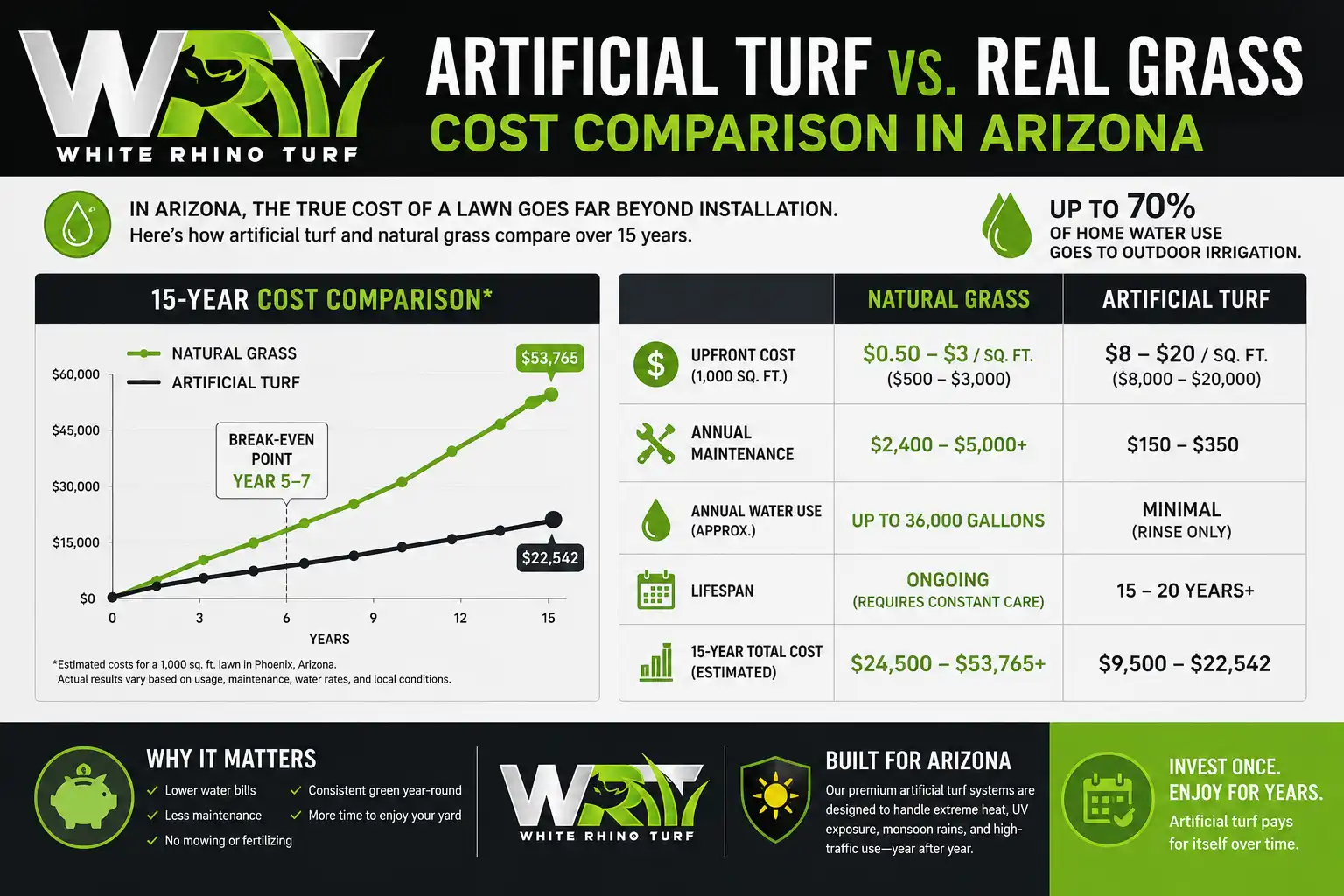
At a high level, natural grass usually wins on upfront price, while artificial turf often wins on total cost over time. Real grass is less expensive to install because sod and seed are cheaper than a full synthetic turf system. Turf, however, reduces or eliminates many of the recurring costs that make natural lawns expensive in Arizona—especially irrigation, mowing, fertilizing, reseeding, and ongoing lawn repair.
That doesn’t mean turf is automatically the better fit for every property. Some homeowners still prefer a natural lawn, particularly if they have a small, lightly used yard and don’t mind ongoing upkeep. But for households that want a cleaner, lower-maintenance backyard, are tired of watering a lawn through triple-digit summers, or are already budgeting for a major outdoor upgrade, the cost comparison often tilts toward turf over the long run.
The first place most people start is the initial installation price. Natural grass generally costs less to put in. Depending on the yard size, whether you’re using seed or sod, whether irrigation is already in place, and how much prep work is required, a natural grass lawn can look appealing from a pure upfront-cost perspective.
Artificial turf has a higher starting price because it is a full installation system, not just a surface material. A professionally installed turf project typically includes demolition of existing grass or groundcover, excavation, grading, compaction, a prepared aggregate base, weed barrier components where appropriate, turf layout and seaming, infill, edge detailing, and cleanup. If the yard has drainage issues, unusual contours, dog run needs, transitions to hardscape, or other specialty requirements, those factors also affect the project cost.
For that reason, a turf estimate and a sod estimate are not always apples-to-apples. One is essentially a landscape surface replacement; the other is a built system designed to perform under Arizona conditions for years. If you want a deeper breakdown of the pricing variables that affect synthetic grass projects in this market, our artificial turf installation in Phoenix page and our turf cost guide both explain how site prep, material quality, access, and drainage planning influence total cost.
On the grass side, the installation budget should include more than the sod itself. If you’re starting from bare dirt or removing an old yard, you may also need grading, soil prep, sprinkler adjustments, or irrigation repairs before the lawn is ready to establish properly. In other words, even though real grass is usually cheaper at the beginning, the total startup cost may still be more than homeowners expect—especially if the yard has poor soil or an aging irrigation system.
One reason turf costs more upfront is that a quality installation is designed around durability, drainage, and long-term performance. In Arizona, those details matter. Turf that is installed over an unstable base or without proper grading can develop low spots, hold odor, or wear unevenly. A professionally built turf system is meant to create a consistent surface that can handle heat, foot traffic, pets, and occasional monsoon rainfall without turning into mud or patchy lawn repair work.
When homeowners compare turf to grass, it helps to understand what’s included in a turf project. You are not just buying synthetic blades. You are paying for excavation, removal of existing material, base construction, compaction, shaping the yard for proper water movement, edge security, seaming, infill application, and the labor required to make the finished space look intentional rather than pieced together. Product selection also matters. Higher-quality materials designed for Arizona sun, heat, and heavy use typically cost more than lower-end turf, but they can also hold their appearance longer and perform better over time. Our premium turf built to last page covers some of the quality differences that influence long-term value.
Real grass has a lower entry price, but in Phoenix-area conditions it often becomes more expensive as the years go on. The reason is simple: grass is a living surface, and living surfaces require constant inputs. They need water, mowing, edging, seasonal feeding, weed control, and occasional repairs. They also respond to how they’re used. If dogs repeatedly use the same corner of the yard, if kids play soccer in the same worn path, or if irrigation coverage is uneven, those areas can thin out or die back much faster than the rest of the lawn.
Arizona’s climate adds another layer. Summer heat can stress grass quickly. Monsoon storms can flood low spots, wash out seed, and leave muddy areas that have to recover. Some homeowners overseed in cooler months to keep a green appearance through winter, which adds another seasonal cost. Others end up replacing sections of lawn or paying for repeated irrigation adjustments to keep a natural yard looking presentable.
That’s why a low upfront price for grass can be misleading. If the goal is to understand total ownership cost, the better comparison is not turf vs. sod on day one. It’s turf vs. everything you’ll spend trying to keep that sod alive and attractive over the next decade.
The largest financial difference between artificial turf and natural grass in Arizona usually shows up after installation. A real lawn requires regular upkeep whether you do the work yourself or hire it out. That may include mowing, edging, trimming, blowing clippings, applying fertilizer, controlling weeds, patching bare spots, repairing irrigation, and occasionally reseeding or replacing sections that don’t recover well.
If you pay a landscaper for routine service, those costs add up over time. If you do the work yourself, you still pay for the mower, trimmer, fuel or electricity, fertilizer, weed treatments, sprinkler repairs, and your own time. In a hot climate, many homeowners eventually realize they are spending a surprising amount of money just to maintain a patch of grass that is still inconsistent for part of the year.
Artificial turf changes that equation. It is not maintenance-free, but it is far lower maintenance than real grass. A turf lawn may need occasional rinsing, leaf blowing, brushing in higher-traffic areas, and periodic cleanup if pets use the space regularly. But there is no mowing, no fertilizing, no weekly edging, and no irrigation schedule designed around keeping roots alive. For many Arizona households, that is one of the biggest financial and lifestyle advantages of turf.
If you’re curious what regular upkeep actually looks like for synthetic grass in this market, our artificial turf maintenance guide for Arizona outlines the typical care routine and what homeowners can expect from a properly installed system.
Water is where the artificial turf vs. real grass comparison becomes especially Arizona-specific. A natural lawn needs irrigation to survive and stay green in the Phoenix metro. Depending on the grass type, season, irrigation efficiency, and yard exposure, that can mean a substantial amount of water over the course of a year.
According to the Arizona Municipal Water Users Association, a large share of household water use in the Valley is tied to outdoor irrigation. The University of Arizona Cooperative Extension has also published guidance showing that landscape water demand in desert environments can be significant when lawns are irrigated regularly. In practice, that means a homeowner may not notice the true cost of grass in the initial installation budget, but they will notice it every month on the water bill.
Artificial turf doesn’t completely eliminate water use, because some homeowners occasionally rinse it for dust or pet cleanup, but it dramatically reduces the amount of water required to maintain a green-looking yard. That can make a meaningful difference in long-term ownership cost—especially on larger lawns, in full-sun yards, or in households that currently water heavily to keep natural grass alive through summer.
For homeowners exploring whether a conversion may qualify for incentives, our Phoenix turf rebates guide is worth reviewing alongside local utility or municipal conservation programs.
The exact answer depends on your city, your irrigation habits, and your lawn size, but over several years it can be substantial. A small decorative lawn is obviously less expensive to water than a large backyard with full sun exposure and kids or pets using it daily. Still, in a hot, dry region, natural grass often needs consistent irrigation for much of the year to avoid going dormant or developing dry, stressed areas.
Even if your water bill doesn’t feel dramatic month to month, the long-term cost matters. A homeowner who waters, fertilizes, mows, and periodically repairs a natural lawn over ten years may spend far more than the original installation cost of the grass itself. Turf compresses much of the lawn expense into the front end of the project and then reduces recurring costs afterward. That is one reason the total cost of ownership often becomes more favorable to artificial grass the longer you plan to stay in the home.
For many Arizona property owners, water savings are not only about reducing monthly costs. They are also about simplifying landscape decisions in a region where water conservation is increasingly important. A lawn that depends on regular irrigation can become a frustration point during peak summer usage, irrigation failures, or rising utility rates. A turf lawn, by contrast, stays visually consistent without demanding the same level of water input.
This matters for homeowners, but it also matters for HOAs, rental properties, commercial spaces, and multi-use backyards. A landscape that looks clean and usable without daily irrigation can be easier to manage and more predictable to budget for. When turf is part of a larger low-maintenance yard design that includes travertine, masonry walls, or simplified planting zones, it can reduce both upkeep and water demand across the whole property.
Another place homeowners underestimate the cost of natural grass is repair work. Lawns rarely wear evenly. You may have a stretch that stays healthy while another area turns into a cycle of mud, thinning, reseeding, and frustration. Dog runs are a common example. So are side yards with reflected heat, areas near patios where runoff patterns affect the soil, and parts of the yard where children repeatedly play or where irrigation coverage is inconsistent.
Those repair costs may show up as new sod, patch seeding, sprinkler work, or extra landscaping labor to revive a section that never seems to recover. None of those line items may be huge on their own, but together they contribute to the real cost of grass ownership in Arizona. Artificial turf can still need repairs in rare situations—such as damage from a sharp object, seam failure from poor original installation, or wear in a very high-use zone—but a professionally installed system is generally far more predictable than trying to keep a stressed grass lawn looking even year after year.
Natural grass is a living surface, so it doesn’t have a fixed “lifespan” in the same way turf does. It can continue indefinitely if you keep watering, feeding, mowing, and repairing it. But that’s also the issue: the lawn never really stops costing you money. It may survive for years, but it survives because you keep investing in it.
Artificial turf has a different cost profile. The goal is to install it once and then benefit from a long usable life with relatively limited maintenance. The exact lifespan depends on product quality, installation quality, sun exposure, traffic, pet use, and how well the yard drains, but quality turf in Arizona is often expected to last well over a decade. Our guide to how long artificial turf lasts in Arizona breaks down the factors that affect longevity in more detail.
That lifespan is one of the reasons turf often performs well in cost comparisons. Even if the upfront investment is higher, you are spreading that investment across many years of use. With grass, the cost never really stops. With turf, most of the spending happens at the beginning, and then the annual expense typically drops off significantly.
Arizona-specific performance factors also influence cost over time. Heat and UV exposure can stress natural grass and increase water demand. Heavy monsoon rains can overwhelm low spots in a yard, create muddy areas, and wash out sections of seed or newly installed sod. Compact desert soil can make drainage and healthy root establishment more difficult if the yard has not been prepared properly.
Artificial turf doesn’t remove those environmental realities, but it can be designed around them. Base preparation, grading, infill selection, and the quality of the turf product all play a role in how well the surface performs through Arizona weather. If a homeowner is choosing turf because they are tired of battling muddy areas, worn dog runs, or a lawn that never seems to recover after summer, those performance benefits are part of the cost conversation too. You are not only comparing bills—you are comparing how much work and frustration each surface creates over time.
Pet owners often feel the difference between grass and turf faster than anyone else. Dogs can wear down natural grass quickly, especially if they use the same section of the yard every day. Urine spots, holes, muddy traffic paths, and odor retention in overwatered areas can all increase the maintenance burden of a real lawn. If you’re constantly patching dead spots or trying to keep a dog run from turning into dirt, the ongoing cost of natural grass becomes much more noticeable.
Artificial turf built for pets can reduce a lot of those recurring problems. It won’t eliminate all cleaning or maintenance, but it can create a more consistent, usable yard surface that drains well and doesn’t turn to mud after watering or storms. For dog owners specifically, the cost conversation often includes convenience just as much as dollars. If you are already looking at turf because of pets, our pet-friendly turf installation in Arizona page and our article on the best artificial grass for dogs in Phoenix are useful next reads.
One reason some homeowners stay with natural grass even when they know turf may cost less long term is the upfront investment. That’s understandable. A lawn project is still a home improvement project, and not everyone wants to pay for it all at once. Financing can change the way that comparison feels.
If turf is expected to reduce ongoing water, lawn-care, and repair costs, spreading the installation cost over time may make the switch more practical for households that are trying to balance cash flow with long-term savings. White Rhino Turf offers 0-interest artificial turf financing in Phoenix, which can be helpful for homeowners who want to improve the yard now rather than continue paying to maintain a lawn they don’t really enjoy.
Financing does not make turf “cheap,” and it should not be treated as a substitute for understanding total project cost. But it can make the comparison more realistic. Instead of asking, “Can I pay for turf all at once?” some homeowners are really asking, “Would I rather keep spending money every month on water, mowing, repairs, and lawn frustration—or put that money toward a lower-maintenance yard I actually want?”
Not every lawn decision is purely about utility bills. For some homeowners, part of the value of turf is aesthetic consistency. A professionally installed synthetic lawn can stay green and tidy-looking through the hottest parts of the year, even when neighboring natural lawns are stressed, patchy, or dormant. That visual consistency can matter if the yard is a major part of how you use the home, entertain guests, or think about curb appeal.
There is no universal formula that says turf adds a specific dollar amount to every home, but it can improve usability, reduce visible wear, and support a cleaner low-maintenance outdoor design. If that’s part of your decision-making process, our article on whether artificial turf increases home value in Arizona explores the topic in more detail.
In other words, some of turf’s “value” doesn’t show up neatly in a spreadsheet. It may show up in how often you use the yard, how much time you spend maintaining it, how it looks in the middle of summer, and whether the space feels finished rather than constantly in need of work.
Even with all of the cost advantages turf can offer in Arizona, natural grass can still be the right fit in certain situations. If you have a very small lawn, already have efficient irrigation, don’t mind doing regular maintenance, and genuinely prefer the feel and care routine of a natural yard, grass may still be the better choice for your property. Some homeowners enjoy the maintenance aspect, or they only need a small decorative patch rather than a highly usable backyard surface.
Grass can also make sense when a homeowner is not ready to commit to a larger upfront investment and the current lawn is functioning well enough for their needs. The important part is going into the decision with realistic expectations. Real grass in Arizona is rarely inexpensive over time, even if it is cheaper to install at the start.
Artificial turf tends to make the strongest long-term cost case in a few common Arizona scenarios:
It can also make sense when the homeowner’s goal is not just cost savings, but a more reliable outdoor surface. A lawn that stays visually consistent, doesn’t need weekly mowing, and is easier to keep usable after pets or storms can be worth a great deal even before you total up the dollars.
If you want a simple way to compare grass and turf, stop thinking only in terms of installation quotes and instead picture what each option costs over ten years.
With natural grass, your budget may include:
With artificial turf, your budget may include:
That comparison is why so many Arizona homeowners who plan to stay in their home for several years start leaning toward turf. The longer the time horizon, the more the recurring cost of grass tends to matter.
If you only compare installation day pricing, real grass usually costs less. If you compare total ownership cost in Arizona over a longer period, artificial turf often comes out ahead—especially for households with larger lawns, pets, high water use, or a desire for a lower-maintenance yard.
The right answer depends on how you use the space, how long you plan to stay in the home, how much upkeep you are comfortable with, and whether your current lawn is actually working for your lifestyle. For some homeowners, a small natural lawn still makes sense. For many others in Phoenix and the East Valley, artificial turf becomes the more practical long-term investment because it reduces water demand, cuts down on maintenance, and creates a cleaner, more usable yard year-round.
If you’re still comparing options, a good next step is to look at real project costs, maintenance expectations, and lifespan together rather than in isolation. Our resources on artificial turf cost in Phoenix, turf lifespan in Arizona, and artificial turf maintenance can help you build a more accurate picture of what the decision looks like for your property.
Artificial turf is usually more expensive upfront, but it is often less expensive over time in Arizona because it reduces irrigation, mowing, fertilizing, reseeding, and lawn repair costs. The longer you plan to stay in the home, the stronger the long-term cost case for turf usually becomes.
Real grass in Phoenix needs regular watering to survive, and that is only part of the cost. Homeowners also have to account for mowing, edging, fertilizer, weed control, sprinkler maintenance, patch repair, and seasonal stress from heat and heavy sun exposure. Dog traffic and monsoon drainage issues can make maintenance even more expensive.
It often does. Turf dramatically reduces the need for irrigation compared to a traditional grass lawn, which can lower outdoor water use over time. Exact savings depend on yard size, watering habits, and your local utility rates, but water reduction is one of the main financial benefits of switching to turf in Arizona.
It depends on the product, the installation quality, and how the yard is used, but professionally installed artificial turf can last many years in Arizona when it is built on a stable base and maintained properly. For a deeper look at lifespan variables, including pets, traffic, and sun exposure, our turf lifespan guide is a helpful resource.
In many cases, yes. Natural grass can wear down quickly under repeated pet use, especially in high-traffic areas. Pet-friendly artificial turf can provide a cleaner, more durable surface that drains well and is easier to maintain than a muddy or patchy dog run. The cost comparison becomes especially favorable when you factor in repeated lawn repair and cleanup on a natural grass yard.
That’s a common concern, and it’s one reason financing can be helpful. If you’re weighing turf because you want to reduce long-term maintenance and water costs, financing may allow you to move forward without paying the full project cost all at once. White Rhino Turf’s financing page is a good place to review available options.

White Rhino Turf delivers professional artificial turf installation in East Valley AZ and across Phoenix. From pet turf and putting greens to full backyard transformations, our licensed in-house crews complete most projects in two weeks or less—with warranties and financing that give homeowners peace of mind.