
- Home
- Locations
- Turf Installation
- Services
- About
- Recent Projects
- Blog
- Contact
Transform your backyard into a year-round practice space with a custom artificial putting green designed around your property, playing preferences, and short-game goals. White Rhino Turf installs residential putting greens throughout Phoenix, Scottsdale, and the surrounding Valley using specialized golf turf, professionally compacted base materials, precise contours, and performance-tuned infill.
Your putting green can be designed for straight putts, realistic breaks, multiple cup locations, fringe areas, and integrated chipping zones. Every layout is planned to create smooth ball roll, dependable drainage, and long-term stability in Arizona’s intense sun, heat, and seasonal rain.
Designed for golfers who want:
Free on-site design walkthrough • Flexible financing available • Product and labor warranties
5.0Based on 112 reviewspowered by
Start Your Free Estimate
Upgrade your yard with a team you can trust—done right, done clean, and built to last. Transparent pricing delivered within 24 hours. No pressure, no hidden fees.
Tell us about your yard--get transparent pricing in 24 hours.
"*" indicates required fields
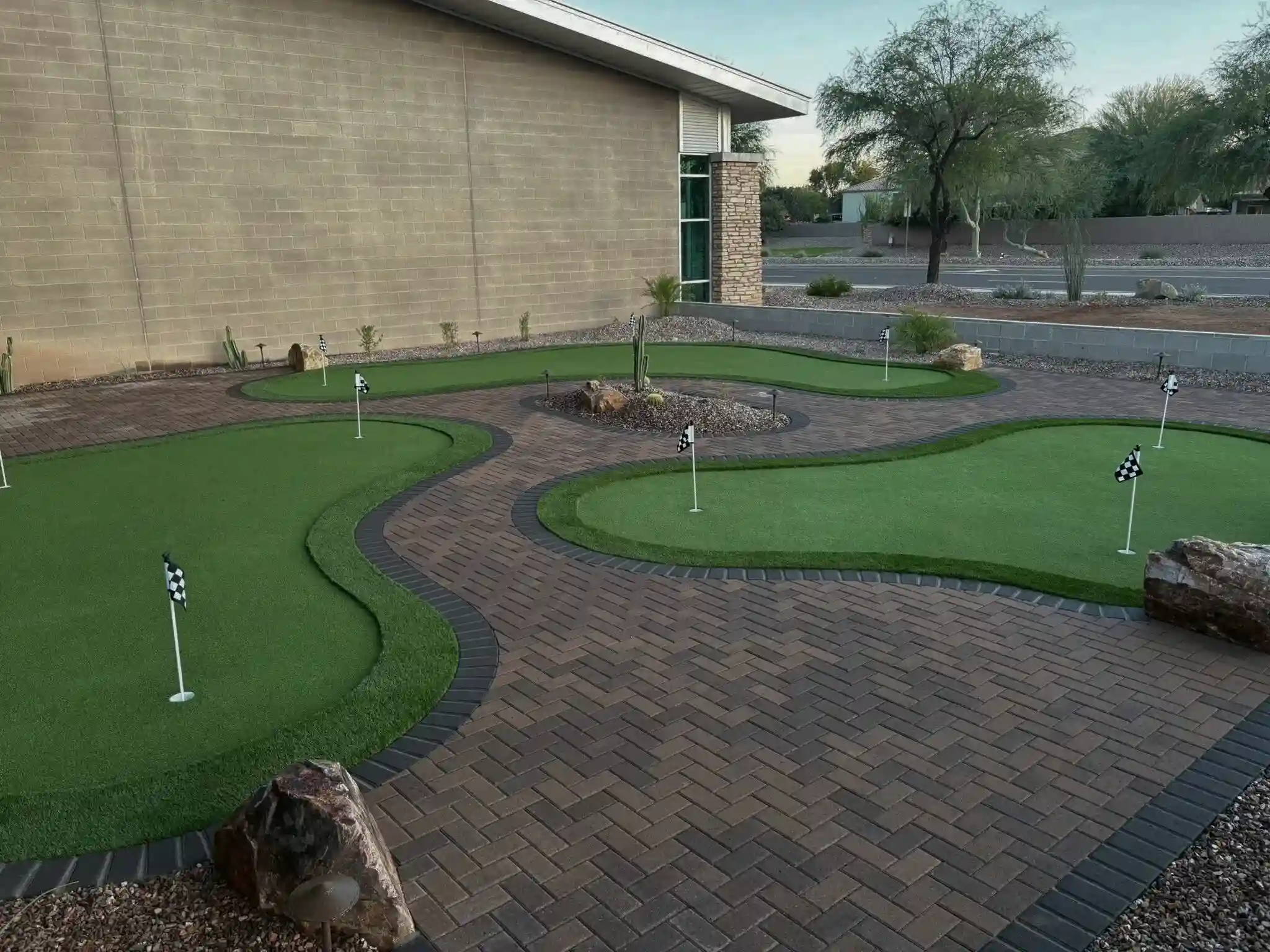
A backyard putting green should be designed around more than available square footage. The shape of the yard, intended practice distance, number of cup locations, surrounding landscaping, drainage conditions, and desired level of difficulty all influence how the finished green should be planned. White Rhino Turf designs custom residential putting greens for full backyards, side yards, narrow spaces, and outdoor living areas near patios, pools, and existing hardscapes.
Unlike a basic turf lawn, a putting green is built as a dedicated golf practice surface. The shorter, denser turf, compacted foundation, carefully shaped contours, and precisely placed cups work together to create predictable ball movement. Homeowners can choose a relatively level layout for repetition and alignment practice or add slopes and breaks that create a more challenging short-game experience.
A synthetic putting green also eliminates much of the upkeep associated with natural grass. There is no mowing, overseeding, fertilizing, or daily irrigation required to keep the practice surface usable. This makes artificial putting turf especially practical in Phoenix and Scottsdale, where extreme heat, water use, intense sunlight, and seasonal monsoon rainfall can make a natural backyard golf green difficult to maintain.
Every project begins with an on-site walkthrough to review the property, discuss how the green will be used, and identify design opportunities or site limitations. Homeowners who want to explore layout, drainage, cup placement, and space considerations in greater detail can also read our guide to planning a backyard putting green in Phoenix.
The goal is to create a putting green that feels like a natural part of the yard while providing a functional, year-round place to practice. Each design is tailored to the homeowner rather than built from a standard template.
A backyard putting green is a specialized performance surface, not simply a section of artificial grass with cups added. Its long-term quality depends on the design, foundation, contours, turf selection, drainage, seam placement, and final speed adjustments. White Rhino Turf approaches each putting green as a custom project built around the property and the way the homeowner wants to practice or play.
From the initial walkthrough through the final performance check, our team focuses on creating a putting surface that rolls consistently, fits naturally into the surrounding yard, and remains dependable in Arizona conditions.

Every project begins with an evaluation of the available space and a discussion about how the green will be used. Some homeowners want straight practice lanes, while others prefer multiple cups, longer putts, custom breaks, fringe turf, or chipping areas.
We also plan the green around pools, patios, pavers, walkways, landscaping, and existing artificial grass so the finished installation feels like a natural part of the yard.
A putting green can look attractive and still perform poorly. Uneven compaction, unsuitable turf, visible seams, or incorrect infill can cause putts to bounce, drift, or slow unexpectedly.
Our installations focus on stable base construction, precise contours, proper turf placement, and calibrated infill to create consistent ball roll and dependable speed.
The foundation beneath the turf helps determine how well the green performs over time. The area is excavated, graded, shaped, and compacted to reduce settling and support the planned contours.
Drainage is also addressed during construction so seasonal rain can move away from the playing surface without creating low spots or affecting ball roll.
Putting green turf has a shorter, denser construction than standard landscape grass. This allows the ball to remain above the fibers and roll more smoothly across the surface.
We select the turf system based on the homeowner’s practice goals and can incorporate taller fringe or landscape turf around the green for added function and visual contrast.
Slopes and breaks should be intentional rather than random. We plan straight putts, breaking putts, practice distances, and cup locations before construction begins.
Contours are formed through the underlying base, creating more stable and repeatable playing conditions than attempting to shape the green with turf or infill alone.
The shape, borders, fringe, and transitions all affect how naturally the putting green fits into the property. We design around pools, patios, pavers, rock, plants, walls, outdoor kitchens, and other existing features.
Secure edges, careful cutting, coordinated turf direction, and clean transitions help the finished green look like a permanent part of the landscape.
White Rhino Turf manages the complete installation process, including layout planning, excavation, base construction, contour shaping, cup placement, turf installation, seaming, infill, and final grooming.
Before completion, the surface is reviewed for consistent roll, clean edges, secure transitions, and overall appearance. Homeowners also receive basic care guidance.
A natural putting green requires mowing, irrigation, fertilization, weed control, and regular surface management. Arizona heat and water demands make that upkeep even more difficult.
Artificial putting greens require no mowing, fertilizing, or overseeding. Occasional debris removal, brushing, and rinsing are generally enough to keep the surface ready for play.
A high-performing putting green depends on precise work beneath the turf as much as the turf itself. White Rhino Turf follows a detailed installation process designed to create reliable ball roll, stable contours, efficient drainage, and long-term durability in Arizona conditions.
We begin with a walkthrough of the property to evaluate the available space, access, drainage, sun exposure, and surrounding landscaping. We also discuss practice goals, preferred green speed, cup locations, contours, fringe, and possible chipping areas.
Homeowners who want to explore layout considerations before the walkthrough can review our guide to planning a backyard putting green in Phoenix.
The planned shape of the green is marked on the property before excavation begins. Existing grass, rock, soil, debris, and unstable materials are removed to create space for the engineered base and finished turf elevation.
A properly prepared base provides the stability needed for consistent ball roll. Base materials are installed in layers, graded, and compacted to help prevent settling, shifting, and uneven areas from developing beneath the putting surface.
The area is shaped to direct water away from the playing surface and surrounding structures. Proper drainage helps protect the green during Arizona’s seasonal rainfall and reduces the risk of pooling, erosion, or soft areas in the base.
Slopes, breaks, and practice lines are formed through the compacted base rather than created with turf alone. Cup locations are measured and positioned to make effective use of the available space and provide several putting angles and distances.
Specialized putting green turf is carefully positioned, cut, secured, and seamed over the finished foundation. Turf direction and seam placement are planned to support smooth tracking and minimize interruptions in ball roll.
The same attention to base preparation, cutting, and edge security is also used throughout our broader artificial turf installation process.
Fringe, rough, or surrounding landscape turf can be added to frame the green and create a natural transition into the rest of the yard. These areas may also support off-green putting, bump-and-run shots, and short chipping practice.
Performance-compatible infill is gradually applied and worked into the turf fibers. The amount and distribution of infill help support the surface and fine-tune how quickly and smoothly the ball rolls.
Before the project is completed, the green is inspected for secure edges, clean seams, consistent contours, drainage, and overall ball roll. We then review the finished installation with the homeowner and explain basic care, including debris removal, rinsing, and occasional brushing.
The result is a custom backyard putting green built to provide realistic practice, low-maintenance use, and dependable performance throughout the year.

Putting green turf and standard artificial grass may look similar from a distance, but they are manufactured and installed for very different purposes. Landscape turf is designed primarily to create the appearance and comfort of a natural lawn. Putting green turf is selected for ball control, surface consistency, speed, and predictable play.
A residential putting green requires a shorter, denser turf system that allows the golf ball to remain on top of the fibers and roll smoothly toward the cup. Standard landscape turf typically has taller blades and a softer feel. Those longer fibers can slow the ball, push it off line, and create an inconsistent surface that is unsuitable for serious putting practice.
The playing characteristics of an artificial putting green depend on the turf fibers, backing, installation method, base construction, and infill. Each component affects how the ball reacts after it leaves the putter face.
Quality putting green turf is manufactured with a low, tightly constructed pile that creates a firm and uniform surface. This helps the ball track accurately without bouncing, dragging, or being redirected by tall turf blades. The turf must also be installed over a properly graded and compacted foundation because even a high-quality product will not perform correctly over an uneven base.
Important putting turf characteristics include:
Standard artificial grass is usually designed for lawns, pet areas, playgrounds, pool surrounds, and general outdoor living spaces. It often has a taller pile, softer fibers, and a layered appearance intended to resemble natural grass. Those features make landscape turf comfortable and attractive, but they interfere with putting performance.
A golf ball rolling across landscape turf may slow down quickly, wobble between the fibers, or move unpredictably. The surface may look like grass, but it will not provide the consistent feedback needed to work on alignment, distance control, or putting mechanics.
Landscape turf can still play an important role around a custom green. It may be installed as fringe, rough, or a surrounding lawn to frame the putting surface and create a more natural transition into the rest of the yard.
Many custom backyard putting greens combine more than one turf style. The central putting surface uses short, dense golf turf, while taller artificial grass may be installed around the perimeter as fringe or rough. This combination improves appearance and gives the green additional practice value.
A fringe area can be used for short bump-and-run shots, off-green putts, and basic chipping practice. Larger designs may also include separate approach areas or chipping zones. The correct turf combination depends on how much space is available and whether the homeowner wants a dedicated putting surface or a broader short-game practice area.
The turf product influences green speed, but it is not the only factor. Ball speed is also affected by the flatness of the base, the amount and type of infill, the condition of the fibers, and the contours built into the surface.
During installation, infill is gradually applied and worked into the turf to support the fibers and help control how quickly the ball rolls. The surface can then be tested and adjusted based on the homeowner’s playing preferences. Some golfers prefer a more forgiving green for recreational use, while others want a faster surface that creates a greater practice challenge.
Choosing the correct turf system is essential to creating a backyard putting green that is useful for real practice rather than simply decorative. White Rhino Turf evaluates the desired ball speed, practice goals, available space, contours, and surrounding landscape before recommending a putting surface and fringe combination for the project.
Upgrading your yard doesn’t have to be complicated. We offer flexible financing options to help you move forward with your putting green project, along with clear warranties that protect both the materials and the installation.
$0 Down Financing Available – Start your project without an upfront payment.
0% Interest for 24 Months – Budget-friendly financing designed to fit your timeline.
15-Year Product Warranty – Long-term coverage on all turf materials.
4-Year Labor Guarantee – Every installation is backed by our workmanship.
This Scottsdale backyard was completely transformed from dirt and rock into a custom putting green designed for everyday practice and play. The project involved replacing the entire outdoor space with high-quality putting green turf, creating a smooth, natural-looking surface that performs consistently in Arizona conditions.
The homeowner wanted a putting green that felt realistic, required minimal upkeep, and could be enjoyed year-round. The result is a full backyard putting green that delivers reliable ball roll, blends cleanly into the surrounding space, and turned an unused yard into a functional golf practice area the homeowner loves.


A beautiful putting green is only successful if it performs like a true golf practice surface. Consistent ball roll, realistic speed, and predictable breaks are the result of careful engineering—not simply choosing quality turf. Every phase of the installation, from excavation through final infill adjustments, contributes to how the green plays for years to come.
Professional putting greens are built from the ground up with performance in mind. The foundation must remain stable, the surface must drain efficiently, and the turf system must provide a smooth, uninterrupted path for the golf ball. Even minor imperfections in grading, compaction, or seam placement can affect putting accuracy and consistency.
Several factors work together to create a realistic backyard putting experience.
No two golfers practice the same way. Some homeowners want a relatively flat green for repetitive stroke development, while others prefer multiple elevations, longer putts, and challenging breaks that simulate on-course conditions. During the design process, we discuss how you intend to use the putting green so the layout complements your practice routine rather than following a one-size-fits-all design.
Many projects also include fringe turf or dedicated chipping areas that create additional short-game opportunities beyond putting alone. These features allow golfers to practice bump-and-run shots, chip shots, and recovery shots without leaving home.
The goal isn’t simply to create a putting green that performs well on installation day—it’s to build one that continues delivering consistent speed, smooth ball roll, and dependable performance through years of Arizona heat, UV exposure, seasonal rainfall, and regular use. When the foundation, turf system, contours, and finishing details are built correctly, homeowners enjoy a practice surface that remains reliable every time they step outside.
White Rhino Turf designs and installs custom backyard putting greens throughout the Phoenix metro area and surrounding Arizona communities. Each project is planned around the property’s available space, drainage, sun exposure, surrounding landscaping, and the homeowner’s short-game goals.
From compact side-yard practice greens to larger backyard layouts with multiple cups, contours, fringe, and chipping areas, our team builds putting greens designed for realistic ball roll, low-maintenance use, and long-term performance in Arizona conditions.
We also serve homeowners in Phoenix and additional communities throughout the Valley. View our complete artificial turf service area to see more locations.
Property layouts and installation conditions vary across the metro area, so every project begins with an on-site walkthrough. We’ll review your available space, discuss practice goals, and identify putting green design options that fit naturally into your yard.
A well-designed putting green starts with understanding your space, practice goals, and preferred playing experience. During your on-site walkthrough, we’ll evaluate the yard, discuss putting distances, cup locations, contours, fringe, chipping options, drainage, and how the green can fit into your surrounding landscape.
White Rhino Turf installs custom backyard putting greens throughout Phoenix, Scottsdale, and the surrounding Valley. Every project is planned for realistic ball roll, long-term stability, and dependable performance in Arizona conditions.
Call (602) 694-7873 to schedule your putting green design walkthrough.
Tell us about your yard--get transparent pricing in 24 hours.
"*" indicates required fields

White Rhino Turf delivers professional artificial turf installation in East Valley AZ and across Phoenix. From pet turf and putting greens to full backyard transformations, our licensed in-house crews complete most projects in two weeks or less—with warranties and financing that give homeowners peace of mind.


