- Home
- Locations
- Turf Installation
- Services
- About
- Recent Projects
- Blog
- Contact
Artificial turf is one of the smartest landscaping investments Arizona homeowners can make. It eliminates mowing, dramatically reduces water usage, stays green year-round, and creates a clean outdoor space for families and pets. But one of the most common questions homeowners ask before installing synthetic grass is simple:
How long does artificial turf last in Arizona?
Whether you’re considering residential turf installation for a backyard makeover or researching long-term landscaping costs, understanding turf lifespan can help you make a more informed decision. While lower-quality products may begin showing signs of wear within a few years, premium artificial turf designed for Arizona conditions can often last 15 to 20 years or more.
In this guide, we’ll explain what impacts artificial turf lifespan, how Arizona’s climate affects synthetic grass, warning signs that turf is reaching the end of its life, and what homeowners can do to maximize their investment.
Most high-quality residential artificial turf installations last between 15 and 20 years when properly installed and maintained.
In Arizona, where UV exposure is significantly higher than most of the country, lower-quality turf products may begin fading or wearing out sooner. Premium turf systems designed for desert climates generally perform much better and can maintain their appearance for well over a decade.
The biggest difference between turf that lasts 10 years and turf that lasts 20 years often comes down to installation quality, drainage, product quality, and ongoing maintenance.
The infographic below breaks down the average artificial turf lifespan in Arizona and the factors that most impact durability.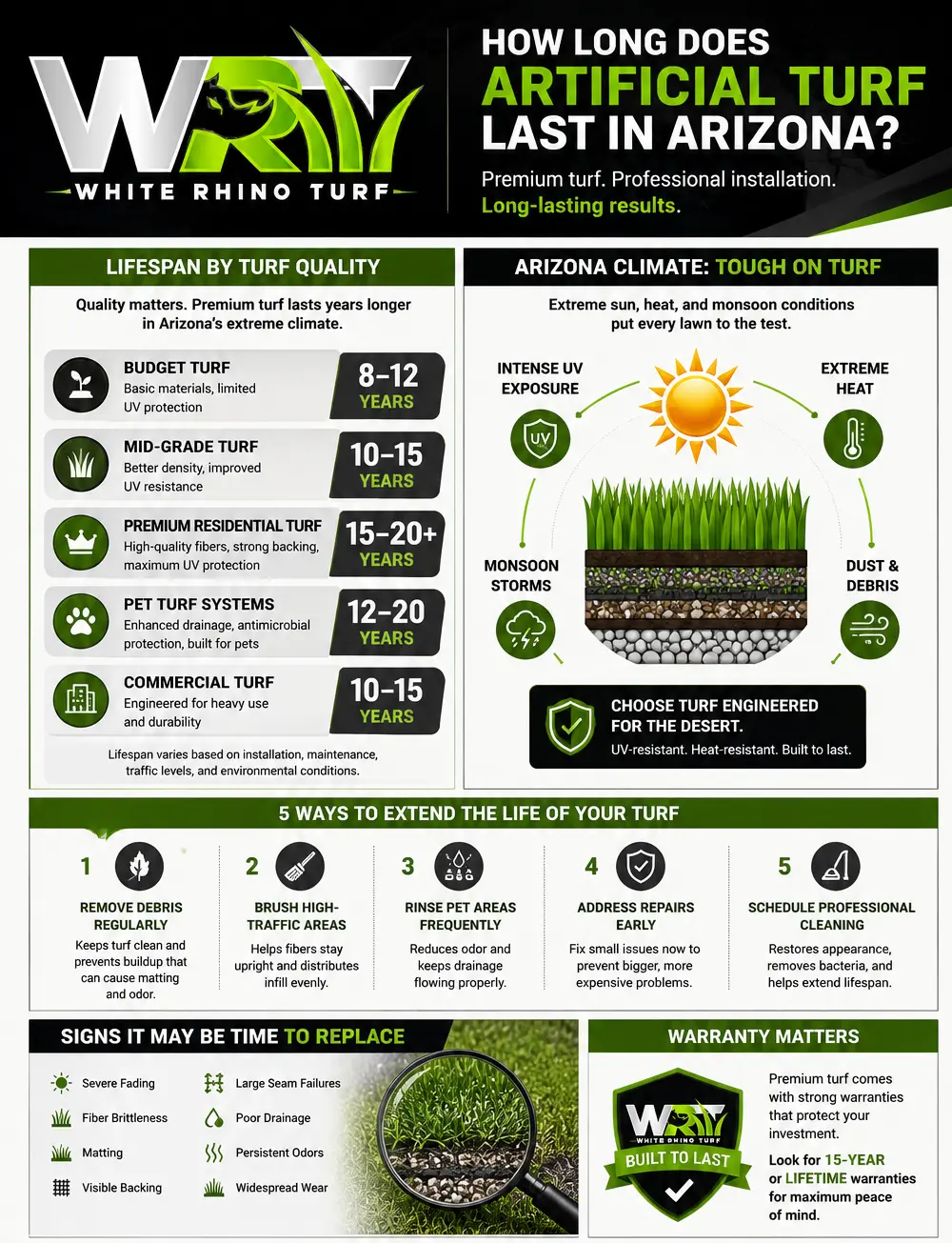
Arizona is one of the most demanding environments for any outdoor surface.
Phoenix and surrounding cities experience some of the highest UV levels in the United States, along with extreme summer temperatures that routinely exceed 110 degrees. Artificial grass must withstand constant sunlight, heat, monsoon storms, dust, debris, pet activity, and year-round outdoor use.
Many homeowners combat these conditions by choosing specialized heat-resistant turf installation systems that are engineered specifically for desert climates. These products often include advanced UV inhibitors, cooling technologies, and stronger backing systems that improve long-term durability.
Unlike cooler climates where turf receives seasonal breaks from sunlight, Arizona lawns receive nearly constant exposure throughout the year.
According to research published by Cornell University’s Sports Field Management Program, synthetic turf surfaces can withstand substantial usage compared to natural grass, but climate conditions still play a major role in long-term performance.
For additional information about synthetic turf research, visit:
https://safesportsfields.cals.cornell.edu/synthetic-turf/
Not all artificial grass products are created equally.
Lower-cost turf often uses thinner fibers, weaker backing materials, and fewer UV inhibitors. While these products may look good initially, they tend to wear out much faster under Arizona conditions.
Premium turf typically includes:
The quality of the turf itself plays a major role in determining whether your investment lasts 10 years or 20 years.
Choosing the best artificial grass for Arizona heat can dramatically improve long-term performance by reducing fading, brittleness, and premature wear caused by intense desert sun exposure.
Premium UV-resistant artificial turf may cost more upfront, but it often delivers substantially better value over its lifespan because it maintains its appearance longer and requires fewer repairs.
Even the best artificial turf can fail prematurely if it isn’t installed correctly.
Proper installation includes:
Poor installations often develop:
A professionally installed foundation often determines how well turf performs over the next two decades.
A professional artificial turf installation in Phoenix starts with proper excavation, grading, drainage planning, and base preparation. These steps help create a stable foundation that supports long-term durability.
The quality of the installation is often just as important as the quality of the turf product itself.
Sunlight is the single biggest factor affecting turf longevity in Arizona.
Over time, UV radiation breaks down the polymer structure of turf fibers. This process can lead to:
Modern turf manufacturers combat this through UV stabilizers and advanced fiber technologies, but prolonged exposure still impacts long-term performance.
Research shows that high UV environments can shorten artificial turf lifespan by as much as 20% to 30% compared to more moderate climates.
This is one reason Arizona homeowners should avoid selecting turf products based solely on price. Products designed specifically for desert environments generally outperform generic synthetic grass options.
Many of today’s premium turf products incorporate UV-resistant technology that helps preserve color and structural integrity even after years of Arizona sun exposure.
Usage matters.
A decorative front yard receives significantly less wear than a backyard used daily by children and dogs.
High-traffic areas experience:
Premium turf products are designed to recover from traffic, but all surfaces experience some degree of wear over time.
Areas around pools, outdoor kitchens, play spaces, and gathering areas often receive the highest concentration of foot traffic and may require occasional grooming to maintain appearance.
Heavy foot traffic doesn’t necessarily mean your turf will wear out quickly. High-quality products are engineered to bounce back after use, especially when they are properly installed and maintained. Homeowners who invest in premium turf often find that their lawn continues looking great long after lower-quality alternatives have flattened or worn down.
Artificial turf for dogs can absolutely last 15 years or longer, but pet activity creates additional considerations.
Factors include:
Pet-specific turf systems generally perform best because they are engineered with enhanced drainage and antimicrobial technologies.
Many Arizona homeowners choose pet-friendly turf installation systems because they provide superior drainage, odor control, and durability in high-use areas. These systems are specifically designed to handle active dogs while remaining clean and easy to maintain.
Unlike natural grass, pet turf doesn’t develop muddy patches, dead spots, or exposed dirt areas. This means the turf often maintains its appearance much longer while creating a cleaner outdoor environment for pets and families.
Artificial turf requires very little maintenance compared to natural grass, but some maintenance is still necessary.
Homeowners who regularly clean and groom their turf typically see longer lifespans than those who completely ignore it.
Following a consistent maintenance schedule is one of the easiest ways to maximize turf lifespan. Our artificial turf maintenance guide for Arizona covers the cleaning, grooming, and preventative maintenance practices that help preserve appearance and performance.
Regular maintenance helps prevent:
Even simple tasks such as removing debris and rinsing pet areas can add years to the lifespan of synthetic grass.
If your goal is maximizing your investment, a few simple maintenance habits can add years to your turf’s lifespan.
Leaves, dirt, and organic debris can accumulate over time.
Regular removal helps prevent:
A leaf blower, stiff broom, or turf rake can help keep the surface clean without damaging the fibers.
Occasionally brushing turf helps keep fibers standing upright and distributes infill evenly.
This is particularly important in:
Routine grooming can dramatically improve appearance and extend turf lifespan.
Pet owners should periodically rinse areas where dogs frequently urinate.
This helps minimize odor buildup and keeps drainage systems functioning properly.
Many homeowners pair routine rinsing with specialized pet-safe cleaning products for additional odor control.
Small seam issues or edge lifting can often be repaired easily if caught early.
Ignoring small problems can lead to more extensive damage later.
Routine inspections can help identify developing issues before they become expensive repairs.
Periodic professional turf cleaning can:
Many Arizona homeowners schedule professional turf maintenance every 12 to 24 months depending on usage levels.
Yes, all artificial turf experiences some degree of fading over its lifetime.
However, modern synthetic turf performs dramatically better than older generations.
Premium turf products incorporate advanced UV inhibitors designed to minimize fading even under Arizona’s intense sun.
Most homeowners will not notice significant fading for many years when using high-quality products.
The earliest signs often include:
When quality turf is selected, fading typically occurs gradually rather than suddenly.
Choosing the best artificial grass for Arizona heat is one of the most effective ways to reduce fading and preserve appearance for the long term.
Heat alone does not usually damage quality artificial turf.
The bigger concern is concentrated heat sources.
Homeowners concerned about summer temperatures often choose a cool turf installation that utilizes specialized technology designed to reduce surface heat buildup and improve comfort.
Common examples of concentrated heat sources include:
Certain low-E windows can reflect sunlight intensely enough to melt synthetic turf fibers.
If you notice concentrated reflection patterns, window films or screens may help prevent damage.
For additional information about turf heat management, visit:
https://www.epa.gov/heatislands
If heat is a major concern, our guide on how to keep artificial turf cool in Arizona heat covers practical ways to improve comfort while protecting your investment.
Many homeowners also pair cooling technologies with heat-resistant artificial turf products to achieve the best results during Arizona summers.
Arizona homeowners face unique challenges that don’t affect synthetic turf owners in cooler climates.
The combination of intense UV exposure, prolonged summer temperatures, and year-round outdoor use means product selection becomes especially important.
When evaluating artificial turf options, homeowners should consider:
Investing in higher-quality products often provides better long-term value because the turf maintains its appearance and functionality significantly longer.
Many homeowners also choose specialized installations such as pet turf, cooling turf, and backyard putting greens because these products are engineered for specific applications and usage patterns.
Premium systems used for pet-friendly turf installation are among the most durable artificial grass applications available and are specifically engineered to handle heavy pet activity.
Most premium pet turf systems last between 12 and 20 years.
The exact lifespan depends on:
Many Arizona homeowners find pet turf actually lasts longer than expected because dogs tend to wear out natural grass much faster.
With artificial turf, there is no digging through mud, dead grass patches, or worn-out dirt paths.
A professionally installed putting green installation generally lasts between 15 and 20 years while maintaining consistent ball roll and appearance.
Because putting greens use shorter, denser turf fibers, they often hold their appearance extremely well over time. High-quality putting green turf is engineered to withstand repeated golf activity while maintaining smooth, predictable performance.
Factors that influence putting green lifespan include:
Routine grooming and occasional infill maintenance help preserve ball roll consistency throughout the lifespan of the surface.
Many Arizona homeowners find that backyard putting greens remain one of the most durable artificial turf applications because traffic is concentrated differently than on traditional lawns.
Commercial turf installations often experience significantly more foot traffic than residential lawns.
Typical commercial lifespan ranges include:
Businesses that schedule routine maintenance typically achieve longer service life.
Commercial properties often choose synthetic turf because it provides:
The key to maximizing commercial turf lifespan is selecting products designed for higher traffic volumes and ensuring professional installation from the start.
Eventually, every artificial turf installation reaches the end of its useful life.
Common warning signs include:
Many of these issues can be repaired when caught early.
However, extensive deterioration may indicate replacement is the most cost-effective option.
Homeowners often notice aging turf through changes in appearance before functionality is affected. Color loss, flattened fibers, and increased heat retention are frequently among the earliest indicators.
If your turf is more than a decade old and showing multiple signs of deterioration, it may be worth consulting a professional to evaluate whether repairs or replacement offer the best long-term value.
When evaluating lifespan, it’s important to consider total ownership costs.
Natural grass requires ongoing investments in:
Over a 15- to 20-year period, these recurring expenses often exceed the cost of installing artificial turf.
Many Arizona homeowners choose synthetic grass because it provides predictable long-term value while dramatically reducing water consumption.
In addition to financial savings, artificial turf offers benefits that natural grass struggles to match in desert climates:
While artificial turf requires an upfront investment, many homeowners view it as a long-term landscaping upgrade rather than an ongoing maintenance expense.
One of the best indicators of product quality is the manufacturer’s warranty.
Most reputable artificial turf manufacturers offer warranties ranging from 8 to 15 years depending on the product.
A quality artificial turf warranty may cover:
However, warranties often exclude:
When comparing turf products, homeowners should review both the warranty length and what is actually covered.
The best artificial turf systems combine strong warranty protection with proven performance in Arizona’s climate.
Eventually, every synthetic lawn reaches the end of its useful life.
The cost of artificial turf replacement depends on several factors:
In many cases, homeowners can reuse portions of the existing foundation, helping reduce replacement costs.
The good news is that most premium turf systems provide well over a decade of performance before replacement becomes necessary.
By choosing quality materials and following proper maintenance practices, many homeowners significantly delay replacement timelines.
For many Arizona homeowners, absolutely.
A properly installed turf lawn provides:
When spread over a 15- to 20-year lifespan, the annual cost of ownership is often surprisingly affordable.
For homeowners comparing long-term landscaping solutions, artificial turf frequently delivers one of the strongest returns on investment available in Arizona.
This is particularly true when using premium products designed specifically for desert climates.
Most premium residential artificial turf installations in Arizona last between 15 and 20 years. Lower-quality products may last closer to 8 to 12 years.
High-quality synthetic grass designed for desert environments can often last 15 years or more despite Arizona’s extreme heat and UV exposure.
Extreme heat combined with UV exposure can accelerate aging. This is why selecting products specifically engineered for Arizona conditions is important.
Yes, but far less than natural grass. Occasional cleaning, brushing, rinsing, and debris removal help maximize lifespan.
Not when the correct turf system is installed. Premium pet turf is designed specifically to withstand heavy dog activity.
Eventually, prolonged UV exposure can cause fibers to lose flexibility. High-quality UV-resistant turf slows this process significantly.
Some gradual fading is normal over many years. Premium products contain UV inhibitors that help maintain color much longer.
Most homeowners benefit from professional cleaning every 12 to 24 months, especially households with pets.
Many issues such as seam separation, edge lifting, and localized damage can often be repaired without replacing the entire lawn.
The three biggest factors are turf quality, installation quality, and Arizona’s UV exposure.
Yes. Premium pet turf systems often last just as long as standard residential turf when properly maintained.
For homeowners seeking lower water bills, reduced maintenance, and a consistently green lawn, artificial turf is often one of the best long-term landscaping investments available.
So, how long does artificial turf last in Arizona?
For most homeowners, the answer is between 15 and 20 years when premium materials are installed correctly and maintained properly.
Arizona’s harsh sun and extreme temperatures can be challenging, but modern synthetic turf has evolved dramatically over the last decade. Today’s UV-resistant products are engineered specifically to withstand desert conditions while maintaining their appearance for years.
Whether you’re planning an artificial turf installation in Mesa, upgrading an existing lawn, installing pet turf, or creating a custom backyard putting green, investing in quality materials and professional installation is the best way to maximize lifespan and long-term value.
A properly designed and professionally installed artificial turf system will not only look great today but continue performing for many years to come. By choosing products built for Arizona’s climate and following a simple maintenance routine, homeowners can enjoy a beautiful, low-maintenance lawn for well over a decade.

White Rhino Turf delivers professional artificial turf installation in East Valley AZ and across Phoenix. From pet turf and putting greens to full backyard transformations, our licensed in-house crews complete most projects in two weeks or less—with warranties and financing that give homeowners peace of mind.