Artificial turf is one of the smartest landscaping investments Arizona homeowners can make. It eliminates mowing, dramatically reduces water usage, stays green year-round, and creates a clean outdoor space for families and pets. But one of the most common questions homeowners ask before installing synthetic grass is simple:
How long does artificial turf last in Arizona?
Whether you’re considering residential turf installation for a backyard makeover or comparing long-term landscaping costs, use approximately 15 years as a planning estimate. Actual lifespan depends on the product, installation quality, drainage, sun exposure, and how heavily the area is used.
In this guide, we’ll explain what impacts artificial turf lifespan, how Arizona’s climate affects synthetic grass, warning signs that turf is reaching the end of its life, and what homeowners can do to maximize their investment.
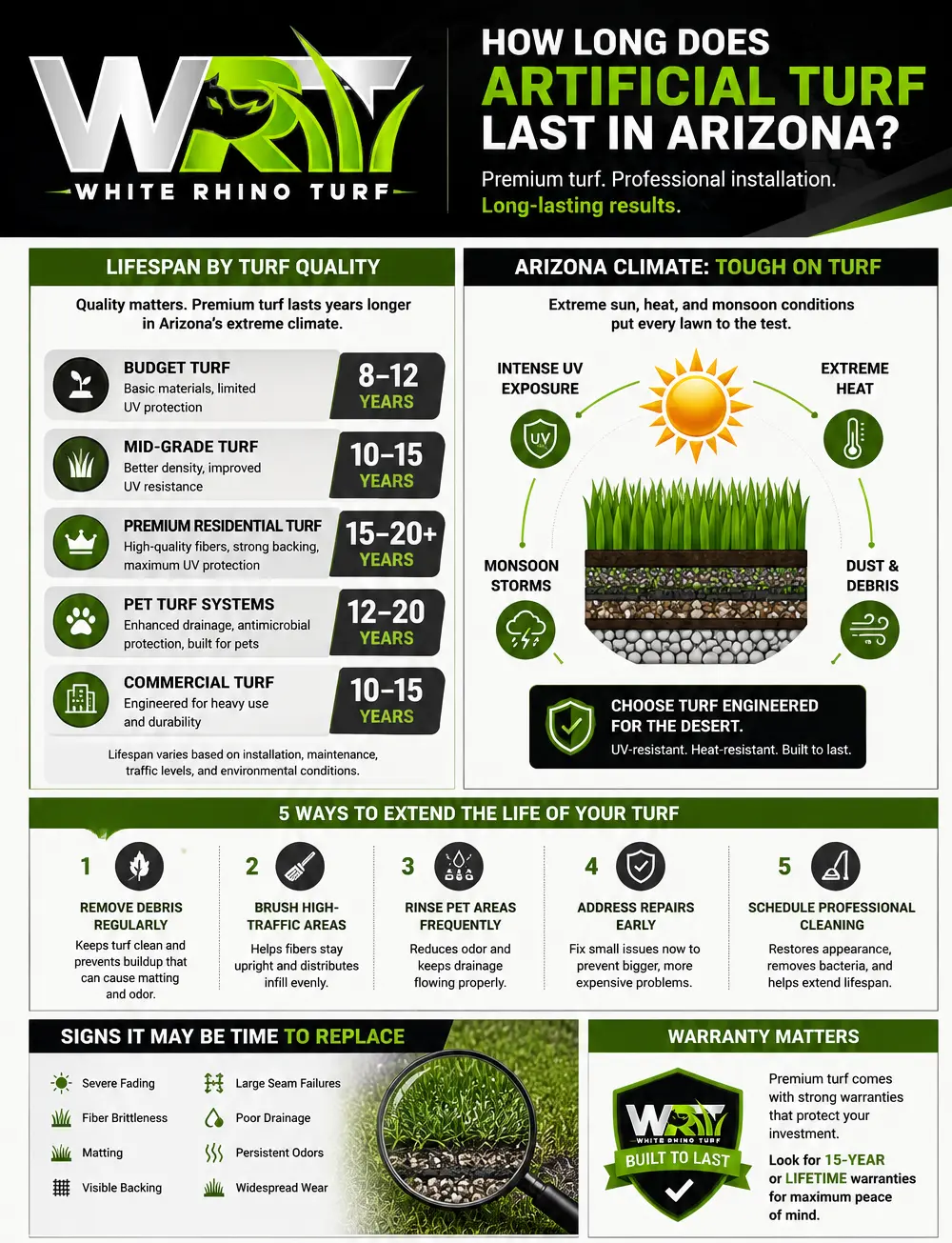
For planning purposes, expect approximately 15 years from a quality artificial turf installation in Arizona. Actual lifespan varies with the product, installation quality, sun exposure, drainage, foot traffic, and routine care. Heavy-use areas may need attention or replacement sooner.
If you’re researching how long fake grass or synthetic turf lasts, these terms generally describe the same type of residential surface. Compare the product specifications and installation details rather than relying on the name alone.
White Rhino Turf provides a 15-year product warranty and 4-year labor warranty. Warranty coverage and expected lifespan are separate; review the applicable warranty terms when comparing your options.
Arizona is one of the most demanding environments for any outdoor surface.
Phoenix and surrounding cities experience some of the highest UV levels in the United States, along with extreme summer temperatures that routinely exceed 110 degrees. Artificial grass must withstand constant sunlight, heat, monsoon storms, dust, debris, pet activity, and year-round outdoor use.
Many homeowners combat these conditions by choosing specialized heat-resistant turf installation systems that are engineered specifically for desert climates. These products often include advanced UV inhibitors, cooling technologies, and stronger backing systems that improve long-term durability.
Unlike cooler climates where turf receives seasonal breaks from sunlight, Arizona lawns receive nearly constant exposure throughout the year.
According to research published by Cornell University’s Sports Field Management Program, synthetic turf surfaces can withstand substantial usage compared to natural grass, but climate conditions still play a major role in long-term performance.
For additional information about synthetic turf research, visit:
https://safesportsfields.cals.cornell.edu/synthetic-turf/
Not all artificial grass products are created equally.
Lower-cost turf often uses thinner fibers, weaker backing materials, and fewer UV inhibitors. While these products may look good initially, they tend to wear out much faster under Arizona conditions.
Premium turf typically includes:
Turf quality affects how well the fibers and backing hold up under daily use and prolonged sun exposure.
Choosing the best artificial grass for Arizona heat can dramatically improve long-term performance by reducing fading, brittleness, and premature wear caused by intense desert sun exposure.
Premium UV-resistant artificial turf may cost more upfront, but it often delivers substantially better value over its lifespan because it maintains its appearance longer and requires fewer repairs.
Even the best artificial turf can fail prematurely if it isn’t installed correctly.
Proper installation includes:
Poor installations often develop:
A properly prepared foundation supports drainage, surface stability, and long-term turf performance.
A professional artificial turf installation in Phoenix starts with proper excavation, grading, drainage planning, and base preparation. These steps help create a stable foundation that supports long-term durability.
The quality of the installation is often just as important as the quality of the turf product itself.
Sunlight is the single biggest factor affecting turf longevity in Arizona.
Over time, UV radiation breaks down the polymer structure of turf fibers. This process can lead to:
Modern turf manufacturers combat this through UV stabilizers and advanced fiber technologies, but prolonged exposure still impacts long-term performance.
Prolonged UV exposure can contribute to fading and fiber deterioration. Compare the manufacturer’s product specifications and warranty coverage when choosing turf for an exposed yard.
This is one reason Arizona homeowners should avoid selecting turf products based solely on price. Products designed specifically for desert environments generally outperform generic synthetic grass options.
Many of today’s premium turf products incorporate UV-resistant technology that helps preserve color and structural integrity even after years of Arizona sun exposure.
Usage matters.
A decorative front yard receives significantly less wear than a backyard used daily by children and dogs.
High-traffic areas experience:
Premium turf products are designed to recover from traffic, but all surfaces experience some degree of wear over time.
Areas around pools, outdoor kitchens, play spaces, and gathering areas often receive the highest concentration of foot traffic and may require occasional grooming to maintain appearance.
Heavy foot traffic doesn’t necessarily mean your turf will wear out quickly. High-quality products are engineered to bounce back after use, especially when they are properly installed and maintained. Homeowners who invest in premium turf often find that their lawn continues looking great long after lower-quality alternatives have flattened or worn down.
Artificial turf for dogs can absolutely last 15 years or longer, but pet activity creates additional considerations.
Factors include:
Pet-specific turf systems generally perform best because they are engineered with enhanced drainage and antimicrobial technologies.
Many Arizona homeowners choose pet-friendly turf installation systems because they provide superior drainage, odor control, and durability in high-use areas. These systems are specifically designed to handle active dogs while remaining clean and easy to maintain.
Unlike natural grass, pet turf doesn’t develop muddy patches, dead spots, or exposed dirt areas. This means the turf often maintains its appearance much longer while creating a cleaner outdoor environment for pets and families.
Artificial turf requires very little maintenance compared to natural grass, but some maintenance is still necessary.
Homeowners who regularly clean and groom their turf typically see longer lifespans than those who completely ignore it.
Following a consistent maintenance schedule is one of the easiest ways to maximize turf lifespan. Our artificial turf maintenance guide for Arizona covers the cleaning, grooming, and preventative maintenance practices that help preserve appearance and performance.
Regular maintenance helps prevent:
Even simple tasks such as removing debris and rinsing pet areas can add years to the lifespan of synthetic grass.
If your goal is maximizing your investment, a few simple maintenance habits can add years to your turf’s lifespan.
Leaves, dirt, and organic debris can accumulate over time.
Regular removal helps prevent:
A leaf blower, stiff broom, or turf rake can help keep the surface clean without damaging the fibers.
Occasionally brushing turf helps keep fibers standing upright and distributes infill evenly.
This is particularly important in:
Routine grooming can dramatically improve appearance and extend turf lifespan.
Pet owners should periodically rinse areas where dogs frequently urinate.
This helps minimize odor buildup and keeps drainage systems functioning properly.
Many homeowners pair routine rinsing with specialized pet-safe cleaning products for additional odor control.
Small seam issues or edge lifting can often be repaired easily if caught early.
Ignoring small problems can lead to more extensive damage later.
Routine inspections can help identify developing issues before they become expensive repairs.
Periodic professional turf cleaning can:
Many Arizona homeowners schedule professional turf maintenance every 12 to 24 months depending on usage levels.
Yes, all artificial turf experiences some degree of fading over its lifetime.
However, modern synthetic turf performs dramatically better than older generations.
Premium turf products incorporate advanced UV inhibitors designed to minimize fading even under Arizona’s intense sun.
Most homeowners will not notice significant fading for many years when using high-quality products.
The earliest signs often include:
When quality turf is selected, fading typically occurs gradually rather than suddenly.
Choosing the best artificial grass for Arizona heat is one of the most effective ways to reduce fading and preserve appearance for the long term.
Heat alone does not usually damage quality artificial turf.
The bigger concern is concentrated heat sources.
Homeowners concerned about summer temperatures often choose a cool turf installation that utilizes specialized technology designed to reduce surface heat buildup and improve comfort.
Common examples of concentrated heat sources include:
Certain low-E windows can reflect sunlight intensely enough to melt synthetic turf fibers.
If you notice concentrated reflection patterns, window films or screens may help prevent damage.
For additional information about turf heat management, visit:
https://www.epa.gov/heatislands
If heat is a major concern, our guide on how to keep artificial turf cool in Arizona heat covers practical ways to improve comfort while protecting your investment.
Many homeowners also pair cooling technologies with heat-resistant artificial turf products to achieve the best results during Arizona summers.
Arizona homeowners face unique challenges that don’t affect synthetic turf owners in cooler climates.
The combination of intense UV exposure, prolonged summer temperatures, and year-round outdoor use means product selection becomes especially important.
When evaluating artificial turf options, homeowners should consider:
Investing in higher-quality products often provides better long-term value because the turf maintains its appearance and functionality significantly longer.
Many homeowners also choose specialized installations such as pet turf, cooling turf, and backyard putting greens because these products are engineered for specific applications and usage patterns.
Use approximately 15 years as a planning estimate, with actual lifespan depending on the product, number of dogs, daily activity, drainage, and cleaning habits. Concentrated potty areas, digging, and repeated running paths can create wear sooner than lightly used areas.
Our pet turf installation services in Phoenix account for how your dogs use the yard, including drainage needs, infill selection, and high-traffic areas.
Around 15 years is a useful planning estimate for a quality backyard putting green, although actual service life varies. Sun exposure, usage, base stability, drainage, and care can affect both appearance and playing performance.
Our putting green installation services include planning the layout and surface for your space. Changes in ball roll, uneven areas, or worn fibers can indicate that the green needs evaluation.
Commercial turf lifespan depends heavily on traffic and how the space is used. A lightly used landscape area may perform differently from an apartment dog park, playground, or busy pedestrian route. Heavy-use surfaces may need replacement sooner than the approximately 15-year residential planning estimate.
For commercial turf installation, compare products suited to the intended use and review their care requirements and warranty terms. Base preparation, drainage, and secure seams also matter to long-term performance.
A professionally installed putting green installation generally lasts between 15 and 20 years while maintaining consistent ball roll and appearance.
Because putting greens use shorter, denser turf fibers, they often hold their appearance extremely well over time. High-quality putting green turf is engineered to withstand repeated golf activity while maintaining smooth, predictable performance.
Factors that influence putting green lifespan include:
Routine grooming and occasional infill maintenance help preserve ball roll consistency throughout the lifespan of the surface.
Many Arizona homeowners find that backyard putting greens remain one of the most durable artificial turf applications because traffic is concentrated differently than on traditional lawns.
Commercial turf installations often experience significantly more foot traffic than residential lawns.
Typical commercial lifespan ranges include:
Businesses that schedule routine maintenance typically achieve longer service life.
Commercial properties often choose synthetic turf because it provides:
The key to maximizing commercial turf lifespan is selecting products designed for higher traffic volumes and ensuring professional installation from the start.
Eventually, every artificial turf installation reaches the end of its useful life.
Common warning signs include:
Many of these issues can be repaired when caught early.
However, extensive deterioration may indicate replacement is the most cost-effective option.
Homeowners often notice aging turf through changes in appearance before functionality is affected. Color loss, flattened fibers, and increased heat retention are frequently among the earliest indicators.
If your turf is more than a decade old and showing multiple signs of deterioration, it may be worth consulting a professional to evaluate whether repairs or replacement offer the best long-term value.
A useful cost comparison includes installation, ongoing care, repairs, and eventual replacement. For natural grass, consider irrigation, mowing, fertilizer, overseeding, and lawn treatments. For artificial turf, include installation, cleaning supplies, grooming, and any repairs needed during use.
Your results depend on yard size, water rates, maintenance habits, and whether you pay for lawn care. Use our artificial turf versus real grass cost comparison to identify the expenses that apply to your property.
One of the best indicators of product quality is the manufacturer’s warranty.
Most reputable artificial turf manufacturers offer warranties ranging from 8 to 15 years depending on the product.
A quality artificial turf warranty may cover:
However, warranties often exclude:
When comparing turf products, homeowners should review both the warranty length and what is actually covered.
The best artificial turf systems combine strong warranty protection with proven performance in Arizona’s climate.
Eventually, every synthetic lawn reaches the end of its useful life.
The cost of artificial turf replacement depends on several factors:
In many cases, homeowners can reuse portions of the existing foundation, helping reduce replacement costs.
The good news is that most premium turf systems provide well over a decade of performance before replacement becomes necessary.
By choosing quality materials and following proper maintenance practices, many homeowners significantly delay replacement timelines.
Artificial turf may be worthwhile if your priorities include less mowing, reduced lawn irrigation, and a more consistent outdoor surface. Its value depends on the installation cost, how you use the yard, and the ongoing care it needs.
Compare a detailed installation estimate with your current lawn expenses over the same period. Include potential repairs and replacement costs rather than assuming the turf will pay for itself within a fixed number of years.
Approximately 15 years is a useful planning estimate for quality residential artificial turf in Arizona. Actual lifespan varies with the product, installation, sun exposure, drainage, traffic, and routine care.
High-quality synthetic grass designed for desert environments can often last 15 years or more despite Arizona’s extreme heat and UV exposure.
Extreme heat combined with UV exposure can accelerate aging. This is why selecting products specifically engineered for Arizona conditions is important.
Yes, but far less than natural grass. Occasional cleaning, brushing, rinsing, and debris removal help maximize lifespan.
Not when the correct turf system is installed. Premium pet turf is designed specifically to withstand heavy dog activity.
Eventually, prolonged UV exposure can cause fibers to lose flexibility. High-quality UV-resistant turf slows this process significantly.
Some gradual fading is normal over many years. Premium products contain UV inhibitors that help maintain color much longer.
Most homeowners benefit from professional cleaning every 12 to 24 months, especially households with pets.
Many issues such as seam separation, edge lifting, and localized damage can often be repaired without replacing the entire lawn.
The three biggest factors are turf quality, installation quality, and Arizona’s UV exposure.
It can, but pet activity affects wear. Multiple dogs, digging, repeated running paths, and concentrated potty areas may shorten service life. Product selection, drainage, and regular cleaning all influence how well the installation holds up.
For homeowners seeking lower water bills, reduced maintenance, and a consistently green lawn, artificial turf is often one of the best long-term landscaping investments available.
Use approximately 15 years as a planning estimate for artificial turf in Arizona. Actual lifespan depends on the product, installation quality, sun exposure, drainage, usage, and routine care.
If you’re planning a new lawn, explore our artificial turf installation services in Phoenix. If your existing lawn has widespread wear, recurring drainage problems, or deteriorating fibers, learn about our turf replacement services.

White Rhino Turf delivers professional artificial turf installation in East Valley AZ and across Phoenix. From pet turf and putting greens to full backyard transformations, our licensed in-house crews complete most projects in two weeks or less—with warranties and financing that give homeowners peace of mind.