
- Home
- Locations
- Turf Installation
- Services
- About
- Recent Projects
- Blog
- Contact
Arizona heat changes the way artificial turf performs. In places like Phoenix, Mesa, Chandler, Gilbert, and Scottsdale, summer temperatures regularly climb above 110°F. Standard artificial grass systems can become extremely hot in direct sunlight, especially when lower-quality materials or the wrong infill are used.
For homeowners with dogs, the challenge becomes even bigger. Turf has to stay comfortable enough for paws, durable enough for daily activity, and designed to handle odor control in dry desert conditions. That is why more homeowners are searching for the best cooling pet turf for hot climates Arizona instead of simply looking for basic artificial grass.
The right cooling turf system combines heat-resistant turf fibers, cooling infill technology, advanced drainage, and proper installation methods built specifically for Arizona conditions. When these components work together correctly, artificial grass becomes far more comfortable during the hottest parts of the year while remaining cleaner and easier to maintain for dog owners.
In this guide, we’ll break down:
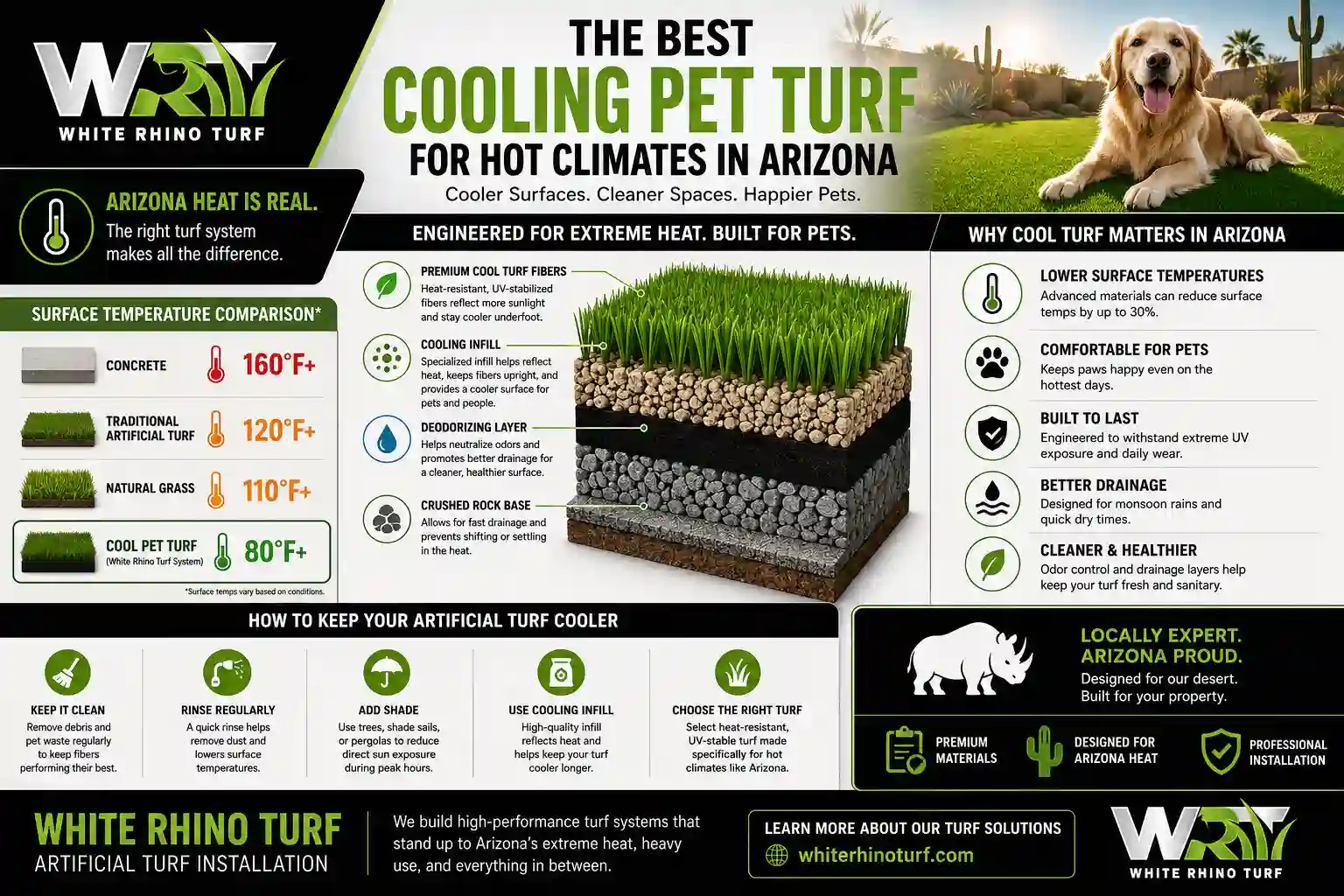
Arizona is one of the harshest climates in the country for artificial turf. Long periods of direct UV exposure, dry air, minimal rainfall, and reflective desert surfaces all contribute to increased surface temperatures.
Traditional artificial grass absorbs and holds heat because synthetic fibers do not cool naturally the same way real grass does. Natural lawns release moisture through transpiration, which creates a cooling effect. Artificial turf does not.
That means poorly designed turf systems can become uncomfortable during peak summer afternoons.
Several Arizona-specific factors make this worse:
For homeowners searching for the best artificial grass for Arizona heat, the goal should not simply be finding turf that survives the heat. The goal should be finding a system designed to actively reduce heat buildup while remaining durable long term.
Homeowners often notice the biggest difference when switching from older turf systems to newer cool turf installation systems designed for Arizona heat.
Not all artificial turf is built the same. Some products are specifically engineered for extreme climates like Arizona.
The best cooling turf systems combine several technologies together instead of relying on one feature alone.
Higher-end cooling turf uses reflective technology built directly into the turf fibers. Instead of absorbing sunlight, these fibers reflect more solar radiation away from the surface.
This helps reduce overall surface temperature compared to standard synthetic grass products.
Premium polyethylene fibers also tend to stay cooler than lower-cost polypropylene products often used in budget installations.
Cooling infill is one of the biggest factors in reducing turf heat.
Products like HydroChill infill use evaporative cooling technology that activates when moisture is added to the turf. A light rinse with water can temporarily reduce surface temperatures significantly during hot afternoons.
According to Southwest Greens, HydroChill technology has shown surface temperature reductions of 30–50°F compared to standard turf systems.
https://www.southwestgreens.com/the-benefits-of-going-with-a-turf-cooling-system/
Drainage affects both odor control and heat retention.
Poor drainage allows moisture, bacteria, and pet waste residue to remain trapped in the turf system. Proper drainage allows water to move quickly through the backing and base layers.
This is especially important for homeowners searching for artificial turf for dogs Phoenix or dog turf Phoenix because pet areas experience heavier daily use.
Many modern pet turf systems now include antimicrobial infill and high-flow backing specifically designed for pet applications.
Darker turf products generally absorb more heat than lighter shades. Some newer turf systems use blended green tones and lighter blade technology to reduce heat absorption without making the lawn appear unnatural.
Dog owners in Arizona typically care about four major concerns:
The best turf systems address all four together.
For homeowners researching the best artificial grass for dogs in Arizona, here are the most important features to prioritize.
High-quality turf systems should be lead-free, non-toxic, and safe for pets to play on daily.
Lower-end turf products may use lower-quality materials that wear down faster under extreme UV exposure.
Dogs create heavy wear patterns over time. Running, digging, and repetitive traffic can stress seams and edges if the turf system is not properly reinforced.
The best artificial turf for dogs Phoenix installations use reinforced backing and proper base compaction to reduce shifting and separation.
Arizona’s dry climate creates unique odor challenges because there is very little natural rainfall to flush ammonia through the system.
That is why many homeowners now pair cooling infill with zeolite or antimicrobial products designed to neutralize odors at the source.
Homeowners comparing turf systems often research the best turf infill for Arizona heat and odor control before selecting a final product.
Proper drainage is critical for dog turf systems. Turf designed specifically for pets typically includes perforated backing and a compacted aggregate base that allows water and pet waste to move through quickly.
This helps reduce lingering moisture and keeps the surface cleaner during monsoon season.
Infill is often overlooked by homeowners, but it plays a major role in heat reduction, odor control, and turf longevity.
Here are the most common cooling infill options used in Arizona.
Zeolite is primarily used for odor control. It captures ammonia molecules from pet urine and helps prevent odor buildup over time.
In Arizona, where rain is limited, zeolite can make a major difference for homeowners with multiple dogs.
HydroChill is another water-activated cooling infill designed specifically for hot climates.
Research from Shaw Sports Turf explains that HydroChill technology can lower surface temperatures significantly during hot conditions.
https://www.prnewswire.com/news-releases/shaw-sports-turf-introduces-hydrochill-300685954.html
Many Arizona homeowners now combine cooling infill with zeolite for both heat reduction and odor control.
This tends to work especially well in larger dog areas or heavily used backyards.
Even the best turf systems still experience heat during Arizona summers. The goal is reducing temperatures enough to keep the space usable and comfortable.
Here are the most effective ways homeowners keep turf cooler in Phoenix.
Pergolas, shade sails, trees, and patio covers dramatically reduce direct sunlight exposure.
Even partial shade can noticeably reduce turf temperatures during the hottest parts of the day.
Homeowners often combine cooling turf with paver and outdoor living designs that incorporate shaded seating areas and reduced sun exposure.
A light spray of water activates evaporative cooling infill systems and temporarily lowers temperatures.
This is one of the easiest ways to cool turf before pets go outside during summer afternoons.
Not all turf products perform the same in Arizona heat.
Systems specifically designed for heat resistance perform noticeably better long term than standard turf products designed for milder climates.
Homeowners comparing options often review heat-resistant turf systems built for Arizona before choosing a product.
The installation itself affects turf temperature more than many homeowners realize.
Improper base depth, poor drainage, incorrect infill amounts, and cheap materials all contribute to hotter surfaces.
A properly designed system helps improve airflow, drainage, and long-term durability.
Many homeowners assume all artificial turf products are essentially the same. In Arizona, small differences in materials and installation methods can create major differences in long-term performance.
Budget turf systems often use lower-quality fibers and cheaper infill materials that retain more heat.
These systems may initially look similar but tend to perform worse during Arizona summers.
Some homeowners invest in high-quality turf but skip cooling infill to reduce project cost.
Without proper infill, surface temperatures can still become uncomfortable during peak summer afternoons.
Poor drainage creates odor issues, bacteria buildup, and moisture retention.
Arizona monsoon storms can expose drainage problems quickly if the base system is not properly prepared.
Some landscape turf products are not designed for heavy pet use.
Dog-specific systems generally include stronger backing, antimicrobial infill, and faster drainage capabilities.
Natural grass remains cooler than artificial turf because of its natural moisture content. However, maintaining a healthy lawn in Arizona requires significant water usage, ongoing irrigation, fertilizers, reseeding, and constant maintenance.
For many homeowners, especially pet owners, artificial turf becomes the more practical long-term solution.
Benefits of modern cooling turf systems include:
The key is selecting a system specifically engineered for Arizona conditions rather than installing standard turf products.
Research from the National Center for Biotechnology Information also confirms that synthetic turf systems can experience elevated surface temperatures compared to natural grass, which is why cooling technology and shading matter significantly in hot climates.
https://pmc.ncbi.nlm.nih.gov/articles/PMC5878252/
Smaller dog areas benefit from:
Large multi-use spaces often combine:
Pool areas experience direct sunlight and reflective heat from decking materials.
Cooling turf systems are especially important around pools where barefoot traffic is common.
Commercial and HOA properties often prioritize:
Some Arizona property managers also integrate commercial turf systems for high-traffic applications where durability matters as much as appearance.
High-quality artificial turf systems in Arizona commonly last 15–20 years when properly installed and maintained.
Longevity depends heavily on:
Arizona’s UV exposure is significantly harsher than many other states, which is why premium materials matter.
Standard turf can become extremely hot in direct Arizona sunlight. However, cooling turf systems with reflective fibers and cooling infill technology stay noticeably cooler and safer for pets.
The best systems combine durable polyethylene fibers, fast drainage, antimicrobial infill, odor control, and cooling technology designed specifically for desert climates.
Homeowners typically use cooling infill, shade structures, lighter turf colors, and occasional water rinses to reduce surface temperatures during summer.
Many Arizona homeowners prefer a combination of cooling infill and zeolite because it helps reduce both surface temperatures and pet odors.
No. Most cooling turf systems are maintained similarly to standard artificial grass. Occasional rinsing and debris removal are typically the main requirements.
Yes. High-quality turf systems built for Arizona conditions are specifically engineered to handle UV exposure, high temperatures, and desert climate conditions for many years.
For many dog owners, artificial turf provides easier maintenance, lower water usage, improved durability, and cleaner conditions compared to maintaining natural grass in extreme desert heat.
Most homeowners lightly rinse pet turf weekly and more frequently during summer months depending on the number of pets using the space.
Odor usually comes from ammonia buildup caused by pet urine combined with heat and limited rainfall. Proper drainage and antimicrobial infill help prevent this.
Yes. Artificial turf eliminates irrigation needs associated with maintaining natural grass while still allowing occasional rinsing for cooling and cleaning purposes.
Heat-resistant turf uses reflective fibers, better UV stabilization, and cooling infill systems designed specifically to reduce surface heat buildup.
Yes. Shade structures significantly reduce direct sunlight exposure and help keep turf cooler during peak summer hours.
Arizona homeowners are no longer limited to basic artificial grass systems that become difficult to use during summer.
Modern cooling turf technology has improved dramatically over the past several years. Reflective turf fibers, advanced drainage systems, cooling infill, and antimicrobial odor-control products now allow homeowners to create cleaner, cooler, and more durable outdoor spaces for pets and families.
For homeowners researching the best cooling pet turf for hot climates Arizona, the biggest difference comes from choosing a turf system specifically designed around Arizona conditions rather than relying on standard synthetic grass products.
Heat-resistant materials, professional installation, proper infill, and smart yard design all work together to create a turf system that remains more comfortable year-round while reducing maintenance, water usage, and long-term frustration.

White Rhino Turf delivers professional artificial turf installation in East Valley AZ and across Phoenix. From pet turf and putting greens to full backyard transformations, our licensed in-house crews complete most projects in two weeks or less—with warranties and financing that give homeowners peace of mind.