- Home
- Locations
- Turf Installation
- Services
- About
- Recent Projects
- Blog
- Contact
Commercial property managers and HOA boards across the Phoenix metropolitan area
are under increasing pressure to deliver attractive, low-maintenance landscapes
while conserving water and meeting tight budgets. Natural grass is visually appealing,
but it consumes thousands of gallons of potable water each month and demands regular
mowing, fertilization, and pest control. In a region where drought restrictions are common
and outdoor water use can account for the majority of a property’s utility bill,
synthetic turf has become a compelling alternative. Commercial artificial turf
is engineered to replicate the look and feel of natural grass using durable polyethylene
and polypropylene fibers stitched into a backing. When installed correctly, it provides
a lush, green surface year-round without constant irrigation or mowing.
This guide walks Phoenix property managers and HOA boards through every consideration
involved in planning a commercial turf project. You will learn how synthetic turf saves
water and maintenance dollars, how to assess your site, what to look for in materials
and contractors, and how to stay compliant with local regulations. Throughout the article
you will find links to in-depth resources and service pages to support your research.
For example, if you are still weighing whether to replace your existing lawn, review our
comparison of the difference between artificial turf and natural grass to understand how
each performs in Arizona’s climate.
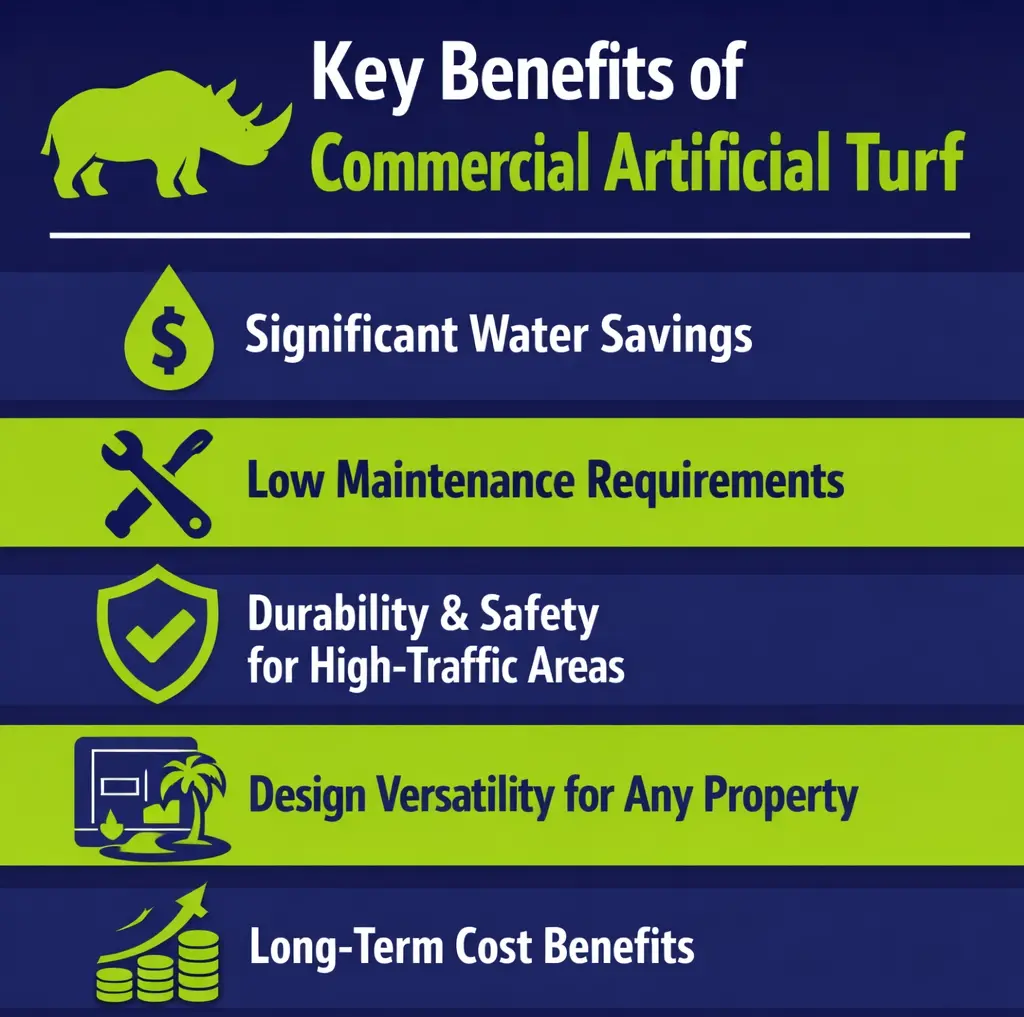
The primary reason Phoenix businesses and communities turn to synthetic turf is water
conservation. In the low desert, natural turf can require extensive irrigation to stay
green, whereas low-water landscapes and turf alternatives can significantly reduce demand.
The University of Arizona Cooperative Extension reports that converting turf areas to
drought-tolerant landscaping can reduce outdoor water
use by up to 50 percent and save 55 gallons per square foot annually. For commercial sites
with large lawns and sports fields, the potential water savings translate to lower operating
costs and a smaller environmental footprint. Phoenix’s own water-efficiency program notes
that choosing desert landscaping can cut outdoor water use by 85 percent, and the city
offers a $2 per square foot rebate when HOAs and commercial customers replace live turf
with low-water landscapes.
Beyond water savings, synthetic turf dramatically reduces maintenance requirements. A
natural lawn must be mowed weekly, fertilized several times per year, and constantly
monitored for weeds, pests, and disease. By contrast, artificial grass requires only
occasional brushing to keep the blades upright and periodic rinsing to remove dust or
spills. There is no need for herbicides or pesticides, which helps protect air quality
and reduces chemical runoff. Over the life of the installation, these maintenance savings
often offset much of the initial investment. For budgeting information on project pricing
and long-term savings, see our overview of
costs of artificial turf in Phoenix.
Artificial turf also creates safe, durable play surfaces for students, tenants, and
employees. High-quality commercial turf systems use multi-layered backing and cushioned
infill that absorbs shock, making them well suited for playgrounds, sports fields, and
dog runs. Because the surface remains even and mud-free after rain, it can handle heavy
foot traffic without rutting or bare spots. Turf blades are anti-microbial, and some
systems incorporate cooling infills to lower surface temperatures—a critical feature in
Arizona’s summer heat. For pet-friendly applications, specialized infill products like
zeolite neutralize odors and promote drainage; you can learn more about them in our guide
to infill materials for heat and odor control.
Every commercial property is unique, and careful planning ensures your turf installation
meets functional and aesthetic goals. Start by defining how the space will be used.
Playgrounds and dog parks require turf that can withstand constant traffic and incorporate
padding for impact protection. Corporate courtyards, office parks, and apartment common
areas benefit from dense, lush turf that looks manicured from a distance. Evaluate sun
exposure throughout the day; south- and west-facing areas may need heat-resistant fibers
or additional shade structures. Assess drainage by observing how quickly water disperses
after storms; poor drainage requires grading and possibly sub-surface drainage systems to
prevent pooling.
Next, review any HOA bylaws or municipal ordinances that apply to your property. Some
communities restrict the use of artificial turf or specify color and pile-height standards.
Phoenix’s non-residential grass removal program requires applicants to remove at least
1,000 square feet of live turf, submit a landscape plan designed by a registered landscape
architect, and install a permanent drip irrigation system for remaining plants. Applying
for incentives before starting work is essential because pre-existing removals do not
qualify for rebates. If your HOA has a design review committee, submit your proposal and
product samples early to avoid delays. Our six-step turf installation guide
explains how professionals prepare and plan projects in Phoenix’s desert soil.
Not all artificial grass products are created equal. When evaluating materials, look for
UV-stabilized polyethylene or polypropylene blades because they resist fading and remain
soft under foot. Pile height between 1.5 and 2.5 inches and a face weight above 70 ounces
per square yard are typical for commercial landscapes; heavier products provide a more
realistic appearance and better durability. The backing system should include a permeable
layer that allows water to drain quickly—an important feature during monsoon storms—and a
secondary coating to increase dimensional stability. For high-traffic areas, consider
commercial grades with a polyurethane backing for added strength.
Infill materials play a critical role in performance. Silica sand or quartz sand is often
used to weigh down the turf and support the blades, while specialized cooling infills
incorporate evaporative technologies to lower surface temperatures by absorbing and slowly
releasing moisture. Zeolite infill neutralizes ammonia odors from pet urine and is an
excellent choice for dog parks or apartment complexes. Crumb rubber infills common on
athletic fields retain heat and can become too hot in the desert sun; alternatives like
coconut husks or synthetic cork are cooler and environmentally friendly. For more insights,
consult our breakdown of the best artificial grass for Arizona heat.
A quality installation is as important as the turf itself. When interviewing contractors,
verify that they hold an Arizona Registrar of Contractors (ROC) license appropriate for
synthetic turf or landscaping. Licensed professionals carry insurance and are held to
standards that protect property owners from subpar workmanship. Ask how many commercial
installations they have completed, whether crews are employed in-house or subcontracted,
and what warranties are offered on both materials and labor.
Obtain at least two detailed proposals that outline the scope of work, materials, project
timeline, and total cost. A reputable contractor should perform a site visit, take
measurements, discuss your goals, and explain the installation process. Be wary of proposals
that are significantly lower than others; low bids may indicate inferior materials,
insufficient base preparation, or a lack of licensing. To learn more about our qualifications,
review our page on experienced commercial turf contractors.
If you are ready to move forward, our commercial turf installation services
page provides an overview of what to expect when you partner with White Rhino Turf.
While every project is unique, most commercial turf installations follow a similar sequence.
First, crews remove existing vegetation, cap or relocate irrigation lines, and grade the site
to ensure proper drainage. Next, they install a compacted base made from crushed rock or
decomposed granite to create a stable foundation. A weed-blocking fabric may be placed over
the base to prevent vegetation from sprouting through the turf. Installers then roll out the
turf, seam the panels together using specialized tape and adhesives, and trim the edges to
fit around paths, borders, and landscape features. Finally, infill is applied and brushed
into the blades to support the turf and enhance cushioning.
Commercial projects sometimes incorporate shock pads beneath the turf, especially for
playgrounds and sports fields. These pads absorb impact and help installations meet fall-height
safety standards set by organizations such as ASTM International. For athletic fields, teams
may request custom fiber blends or stitched logos. If you are planning a sports project,
explore our sports and specialty turf installations to see how shock pads and infill selections vary by activity.
Several variables influence the cost of commercial artificial turf. The size of the project
is the largest determinant; larger properties require more material and labor. Site conditions
such as soil type, grading needs, existing irrigation, and demolition work affect pricing
because they impact preparation time. Higher-quality turf with longer blade lengths and heavier
face weights tends to cost more upfront but lasts longer and looks more natural. Additional
features like shock pads, logos, or specialized infill increase the total. For pet-friendly dog
runs, antimicrobial infills and extra drainage layers add to the budget.
Despite the higher initial cost compared with sod, synthetic turf often delivers a positive
return on investment when viewed over its 15- to 20-year life span. Eliminating mowing,
fertilization, and irrigation can save thousands of dollars annually on large properties.
Water-reduction programs, such as Phoenix’s $2 per square foot incentive for grass removal,
lower out-of-pocket costs and shorten payback periods. By providing a consistent, green
landscape all year without the risk of dead patches or mud, artificial turf can also enhance
property value and tenant satisfaction. For a closer look at pricing variables and sample
budgets, see our detailed cost guide for Phoenix.
Once installed, commercial artificial turf is remarkably easy to maintain. Most property
managers schedule a light cleaning once or twice per month. This involves removing leaves and
debris with a leaf blower or plastic rake and occasionally brushing the turf against the grain
to keep fibers standing tall. In dusty conditions, spraying the surface with a hose helps
remove fine particles; however, because artificial grass does not absorb water like natural
turf, rinsing consumes far less water than irrigation. For high-traffic areas, inspect the
infill level regularly and add more as needed to maintain cushioning and stability.
Pet-friendly installations or dog park areas require special attention to hygiene. Remove
solid waste promptly, rinse the area to dilute urine, and apply enzymatic cleaners or
odor-neutralizing infill when necessary. Zeolite infill absorbs ammonia and helps control
smells between cleanings. For step-by-step instructions on keeping your lawn fresh, explore our
maintenance guide for Arizona and follow our tips on cleaning and deodorizing artificial turf.
One concern property managers often raise is how hot synthetic turf gets under Arizona’s
intense sun. Research has shown some artificial turf surfaces can run significantly hotter
than ambient air temperature, which underscores the importance of choosing modern products and
installation techniques designed to manage heat. The UNLV and Desert Research Institute study
is frequently cited in discussions around surface temperatures and daytime usability. Many
manufacturers now incorporate reflective pigments and ribbed blade shapes that reduce surface
temperature by reflecting rather than absorbing sunlight. Cool infill products absorb moisture
and gradually release it, cooling the surface through evaporation. Strategic shading—such as
planting trees, installing shade sails, or adding pergolas—also lowers temperatures and improves
comfort for users.
Cooling systems alone may not eliminate heat entirely, so it is wise to plan usage accordingly.
Schedule outdoor events during cooler morning or evening hours and provide shaded rest areas.
For sports fields and playgrounds, select infills and pad systems rated for thermal performance
and incorporate misting systems if budgets allow. Our tutorial on keeping turf cool in Arizona heat
offers detailed advice on product selection, shading strategies, and user comfort.
Before installing artificial turf, confirm that your project complies with local regulations
and HOA rules. Some municipalities require a minimum percentage of living plants or prohibit
synthetic turf on street-facing landscapes. Phoenix’s incentive program—designed for HOAs,
apartment complexes, and commercial properties—allows participants to earn a rebate when they
convert live grass to desert landscaping. Applicants must be Phoenix Water customers, remove at
least 1,000 square feet of healthy lawn, submit a landscape plan, and install a permanent drip
irrigation system. Review program details on the City of Phoenix’s Non-Residential Grass Removal Program
page.
HOA boards typically have design review processes that evaluate proposed landscaping changes.
When preparing your submission, include product specifications—such as color, pile height,
and warranty terms—along with drainage plans and photos of installed examples. Note that some
HOAs prohibit turf containing crumb rubber infill or require permeable backing to prevent runoff.
By working closely with your HOA and leveraging incentive programs, you can obtain approval and
financial support for your project. If your community includes pet relief areas, review
pet-friendly turf installation in Arizona
to understand odor control and drainage considerations for shared spaces.
Selecting the right infill ensures your turf performs well in its intended environment. For
commercial lawns and courtyards, round silica sand provides stability without compromising
comfort. For playgrounds or athletic fields, cushioning infill paired with under-padding can
support impact performance targets. Zeolite and other natural minerals neutralize odors in pet
areas. Some infills incorporate cooling technology that lowers surface temperature by absorbing
and releasing moisture. Always choose infills certified for safety and designed for the expected
traffic level. For a deeper dive into infill science and product recommendations, see our article on
infill materials for heat and odor control.
Beyond infill, commercial projects can integrate special features such as inlaid logos, custom
color zones, and shock-absorbing pads to match usage needs. Golf practice areas may combine
putting greens with low-pile, high-density turf that rolls true. Sports complexes often specify
impact and traction characteristics based on the sport. If your facility includes athletic fields
or multi-use courts, consult our sports and specialty turf installations page to explore options
for football fields, soccer pitches, and more.
Commercial turf systems are designed for heavy use and larger spaces. They often feature higher
face weights, stronger backing, and specialized infill to withstand continual foot traffic.
Residential products tend to prioritize softness and aesthetics for front lawns and play areas.
With proper installation and maintenance, high-quality turf can last 15–20 years. UV-stabilized
fibers help resist fading, and regular brushing and infill top-offs maintain performance. Choosing
heat-resistant products and providing shade can help extend the life of the system.
Costs vary depending on the size of the project, site preparation, product quality, and optional
features such as shock pads or custom logos. While synthetic grass typically has a higher upfront
cost than sod, property owners save on water, mowing, and fertilization over the life of the system.
For budgeting guidance, see our Phoenix cost guide.
Modern turf products incorporate cooling technologies and reflective pigments to reduce surface
temperature. Use cooling infill, provide shade, and schedule activities during cooler times of day.
Natural surfaces still remain cooler, so plan accordingly during summer.
Installation involves removing existing turf, grading the site, installing a compacted base, laying
turf rolls, seaming the panels, trimming edges, and applying infill. Professional installation helps
ensure proper drainage and longevity. Our six-step guide explains the process.
Maintenance includes periodic brushing, debris removal, rinsing, and infill top-offs. Pet areas may
require enzymatic cleaners and odor control infills. Detailed care instructions are provided in our
maintenance guide and cleaning tutorial.
Yes. Replacing live turf with synthetic grass eliminates the need for irrigation and can dramatically
reduce outdoor water use, especially when paired with desert-appropriate planting. Local incentive
programs and university research support the role turf conversion can play in broader water-saving
strategies.
Phoenix’s non-residential grass removal program provides a rebate when HOAs, businesses, and
multifamily properties replace live turf with desert landscaping. Eligibility requirements include
removing at least 1,000 square feet of healthy turf and submitting a landscape plan designed by a
registered landscape architect.
Zeolite and other odor-neutralizing infills are ideal for pet areas because they help manage odors
and support drainage. Playgrounds often use cushioning infill paired with padding to support safer
play. Our guide on infill materials offers more details.
Policies vary by community. Many HOAs in the Phoenix area permit synthetic turf for backyards and
common areas but may restrict its use in front yards or require specific colors and pile heights.
Review your association’s architectural guidelines and submit product specifications for approval
before installation.
Choose licensed, insured contractors with experience in commercial turf projects. Verify they offer
solid warranties, provide written estimates, and include detailed descriptions of materials and scope.
Consider references and portfolios. Our commercial turf contractors page highlights what to look for.
Commercial artificial turf has evolved into a durable, practical option for HOA common areas,
multifamily communities, and business properties across the Phoenix area. By planning carefully,
selecting quality materials, hiring experienced contractors, and leveraging local incentive programs,
property managers can convert water-hungry lawns into green spaces that look consistent year-round.
If you want to scope a project or compare options, start with our commercial turf installation services
overview and connect with White Rhino Turf for a straightforward estimate.

White Rhino Turf delivers professional artificial turf installation in East Valley AZ and across Phoenix. From pet turf and putting greens to full backyard transformations, our licensed in-house crews complete most projects in two weeks or less—with warranties and financing that give homeowners peace of mind.