- Home
- Locations
- Turf Installation
- Services
- About
- Recent Projects
- Blog
- Contact
Artificial turf is a popular option for Arizona homeowners who want a clean, green yard without the water and upkeep of natural grass. But if you live with dogs, one concern comes up often: how to remove pet odor from artificial turf and keep it from coming back. With extreme heat, strong sun, and frequent pet use, turf odor management requires a slightly different approach in Arizona than in milder climates.
The good news is that properly installed and maintained artificial turf does not have to smell. Understanding why odors happen and how to prevent them will keep your yard comfortable, hygienic, and enjoyable year-round.
Artificial turf itself does not produce odor. Smells develop when pet urine and organic waste are allowed to sit, concentrate, and interact with heat. Urine contains ammonia, and when moisture evaporates quickly—as it often does in Arizona—the odor becomes more noticeable.
Homes with multiple dogs, high sun exposure, or poor drainage tend to notice smells faster. Turf systems designed with pets in mind account for this by using permeable backing, proper base preparation, and odor-resistant infill materials. You can learn more about pet-friendly turf considerations and how they affect long-term odor control.
Pet odor issues usually stem from one or more of the following factors:
When urine passes through the turf fibers, it should drain efficiently into the base and soil below. If drainage is slow or inconsistent, odor-causing compounds remain trapped near the surface. This is why professional base preparation and correct infill selection matter so much for pet households.
Drainage is one of the most important factors in preventing turf pet odor. A properly installed system allows liquids to move through the turf quickly instead of pooling. If drainage is compromised, urine residue can stay close to the fibers and produce persistent smells.
This is especially important in Arizona, where compacted soil and caliche are common. Turf systems designed for dogs focus on drainage layers, base compaction, and permeable materials that reduce odor buildup over time. More detail on this can be found in resources explaining turf drainage and base prep.
One of the simplest ways to remove pet odor from artificial turf is through consistent habits. Small steps taken regularly are more effective than occasional deep cleanings.
Rinsing helps dilute urine residue and flush it through the turf system before odors have a chance to develop. These practices are part of routine care covered in this turf maintenance guide for Arizona.
If odors have already developed, targeted cleaning can help restore freshness. The key is using products that neutralize odor-causing bacteria rather than masking smells.
Enzyme-based cleaners designed for artificial turf break down organic compounds found in pet urine. These cleaners are most effective when applied after a light rinse, allowing the solution to reach the infill and backing.
Avoid harsh chemicals such as bleach or ammonia-based cleaners, as they can damage turf fibers and worsen odors. A step-by-step breakdown of safe methods is available in this guide on cleaning artificial turf.
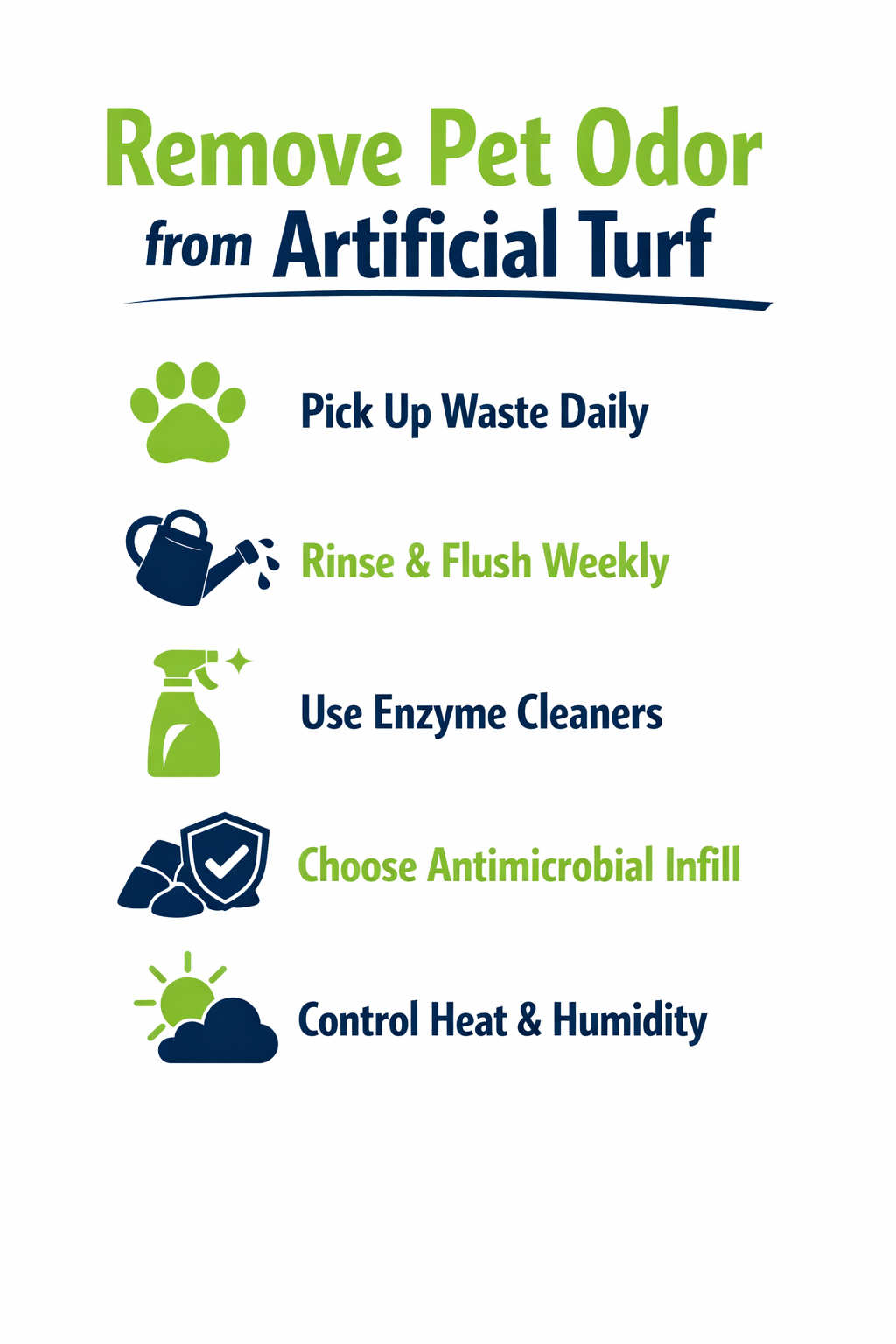
Yes, infill plays a major role in odor control. Standard silica sand provides stability but does not actively prevent odor. Pet-specific infill options may include antimicrobial properties that reduce bacteria growth and help neutralize smells.
Choosing the right infill can significantly reduce how often you need to clean your turf. Arizona homeowners often prioritize infill that performs well in heat while also supporting odor control. A detailed comparison is available in this resource on infill choices for heat and odor control.
Heat intensifies odor because ammonia becomes more volatile as temperatures rise. During summer months, even small amounts of residue can produce noticeable smells by midday.
Cooling strategies such as occasional surface rinsing, shade planning, and selecting lighter-colored turf fibers can help reduce surface temperature. These techniques not only improve comfort but also limit odor activation. Learn more about turf cooling strategies suited for Arizona yards.
Natural grass absorbs urine into soil but often develops bare spots, mud, and lingering smells over time. Artificial turf provides a consistent surface and, when maintained properly, allows for more predictable odor control.
Understanding the differences helps homeowners set realistic expectations and maintenance routines. A broader comparison is outlined in this article on turf versus real grass in Arizona.
If turf odor continues after routine rinsing and enzyme treatments, the issue may lie below the surface. Base materials, drainage layers, or infill distribution may need adjustment.
In these cases, professional evaluation can identify whether sections need refreshing or deeper cleaning. Viewing examples of properly installed systems may help homeowners understand what optimal drainage and layout look like. The installation gallery provides visual context.
Weekly rinsing is typically sufficient, with more frequent rinses during extreme heat or heavy pet use.
It’s best to avoid household chemicals and use enzyme-based products formulated for artificial turf.
Granules can help, especially when combined with proper infill and regular rinsing.
Higher usage increases odor potential, making drainage, infill choice, and cleaning habits even more important.
Light rain may help rinse turf, but it usually isn’t consistent enough in Arizona to replace manual rinsing.
Shaded areas tend to stay cooler, which can reduce odor activation during hot days.
No. With proper maintenance and materials, odors can be removed and prevented.
Yes, when designed and maintained specifically for pets.
Permeable backing improves drainage and reduces odor retention.
Proper base preparation and drainage design are key factors in long-term odor prevention.
For additional information on ammonia, sanitation, and environmental considerations, homeowners may find guidance from the University of Arizona Cooperative Extension, the U.S. Environmental Protection Agency, and the Arizona Department of Environmental Quality.

White Rhino Turf delivers professional artificial turf installation in East Valley AZ and across Phoenix. From pet turf and putting greens to full backyard transformations, our licensed in-house crews complete most projects in two weeks or less—with warranties and financing that give homeowners peace of mind.