
Phoenix summers are intense. Extended periods above 110°F, high UV exposure, minimal cloud cover, and radiant desert heat create some of the most demanding outdoor conditions in the United States.
Because of that, one question comes up consistently among homeowners, HOAs, and commercial property managers: how hot does artificial turf get in Arizona?
The short answer is: it can get very hot in full sun. The longer answer — and the more important one — is that modern turf systems now include cooling technologies specifically designed for extreme desert climates.
This guide breaks down real temperature data, explains why turf heats up, and outlines how cool turf systems reduce surface heat in Arizona.
Artificial turf absorbs and retains solar radiation because it is made from polyethylene or polypropylene fibers. Unlike natural grass, it does not cool itself through transpiration.
Across multiple U.S. studies, researchers have documented:
For comparison, natural grass often stays between 75–95°F because moisture evaporates from soil and blades.
The CDC’s extreme heat guidance explains how surface temperatures significantly exceed air temperature during heat waves — especially on synthetic materials.
Arizona’s intense UV exposure magnifies that effect.
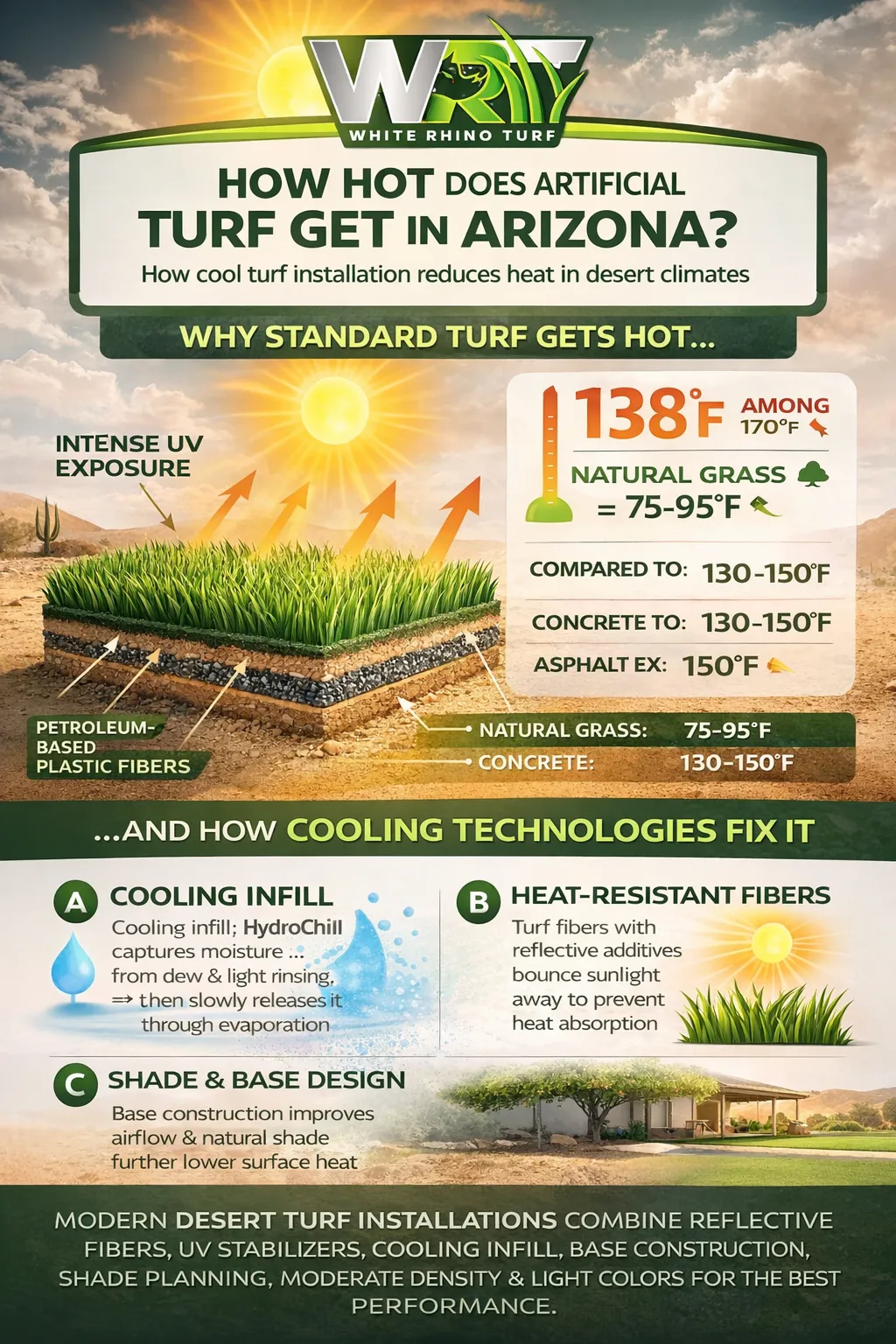
Several Arizona-specific environmental factors contribute to higher artificial turf temperature:
Phoenix receives over 300 sunny days per year. Direct UV exposure causes synthetic fibers to absorb radiant heat quickly.
Natural grass cools itself by releasing moisture. Artificial turf does not have this biological cooling process.
Ultra-dense plush turf traps heat. Airflow becomes limited, increasing surface temperature retention.
Traditional crumb rubber absorbs and stores heat. Some recycled rubber surfaces have been measured above 160°F in full sun.
The EPA’s heat island research explains how synthetic materials retain heat more aggressively than natural surfaces.
Hard, compacted soil beneath turf can store radiant heat if base construction does not allow proper airflow and drainage.
In many Arizona conditions, yes.
While asphalt becomes extremely hot, turf fibers can trap and concentrate radiant heat within the blade canopy. Surface readings may rival or exceed nearby pavement depending on infill and fiber composition.
That’s why cooling systems matter.
Cool turf Arizona systems refer to artificial turf products engineered to reduce heat retention through fiber chemistry, blade design, and cooling infill technologies.
Modern systems combine multiple approaches:
Learn more about cool turf installation in Arizona and how these systems are constructed.
Cooling infill products such as HydroChill and T°Cool use hydrophilic coatings that absorb moisture from dew, rainfall, or light rinsing.
As temperatures rise, the stored moisture evaporates. Evaporation absorbs heat energy, reducing surface temperature — similar to how perspiration cools skin.
Testing has shown temperature reductions of 30–50°F compared to standard turf systems.
For deeper comparison of infill types, visit our guide to heat and odor control infills.
Not all turf fibers perform the same in extreme heat.
Heat resistant artificial grass Phoenix homeowners select typically includes:
Our article on the best artificial grass for Arizona heat explains what to look for in more detail.
Cooling performance is not just about surface materials.
A properly constructed base:
See how this is handled in our residential turf installation process.
Incorporating shade dramatically reduces turf surface temperature.
Options include:
Even partial afternoon shade can lower surface readings by 10–20°F.
Our practical strategies are outlined in how to keep artificial turf cool in Arizona heat.
Pets are more sensitive to hot surfaces than adults wearing shoes.
When selecting turf for pet areas:
Explore our pet-friendly turf installation options for more information.
Natural grass remains cooler in full sun — but requires heavy irrigation during peak summer months.
With water restrictions increasing and utility costs rising, many homeowners weigh cooling differences against maintenance requirements.
For a balanced comparison, see artificial turf vs real grass in Arizona.
While turf can heat up, it also eliminates:
Learn more in why synthetic turf is a smart choice for Arizona homes.
Upgrading to heat resistant artificial turf Phoenix homeowners trust is an investment in comfort and water savings.
White Rhino Turf offers 0% interest artificial turf financing to support long-term planning.
In full sun during peak summer, surface temperatures can exceed 150°F. Recorded readings have shown turf reaching 138°F at 108°F ambient conditions, with heat index values approaching 170°F.
When properly selected and installed with cooling infill and shading strategies, turf remains safe for typical residential use. Avoid barefoot contact during peak midday heat.
A light mist temporarily reduces temperature, especially when paired with evaporative cooling infill. However, product selection provides more consistent results than watering alone.
HydroChill and T°Cool are widely used in hot climates due to their evaporative cooling properties.
High-quality UV-stabilized fibers resist fading and breakdown. Lower-grade materials may deteriorate more quickly under prolonged exposure.
Synthetic materials can absorb heat similarly to pavement. Strategic shading and reflective fiber technology help reduce impact.
Testing shows reductions of 30–50°F compared to traditional non-cooled turf systems when properly activated with moisture.
In full sun, natural grass typically measures cooler due to moisture evaporation. However, maintaining healthy grass in Phoenix requires significant water use.
Understanding how hot artificial turf gets in Arizona — and how cool turf systems mitigate that heat — allows homeowners and property managers to make informed, climate-specific decisions.
With the right materials, proper installation, and thoughtful shade planning, synthetic turf can perform reliably even under Phoenix’s extreme summer conditions.

White Rhino Turf delivers professional artificial turf installation in East Valley AZ and across Phoenix. From pet turf and putting greens to full backyard transformations, our licensed in-house crews complete most projects in two weeks or less—with warranties and financing that give homeowners peace of mind.